




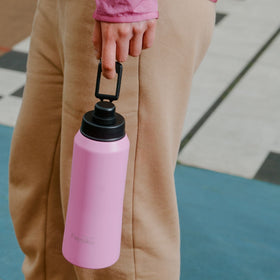

Your Guide to the Best Kids Stainless Steel Water Bottle
Deciding on a kids stainless steel water bottle is one of those simple swaps that just makes sense. It's a small change that ticks all the boxes for busy families: they’re tough, they’re non-toxic, and they’re amazing at keeping drinks cold for hours. Perfect for active kids, everywhere.
Why Stainless Steel Is the Smartest Choice for Kids
Being a parent means making a million little decisions. Switching to a stainless steel water bottle is one of the easiest and most rewarding ones you'll make. It’s a choice that looks after your family's health, makes your day-to-day life a bit simpler, and feels good for the planet. Let's dig into why so many Aussie parents are making the move.
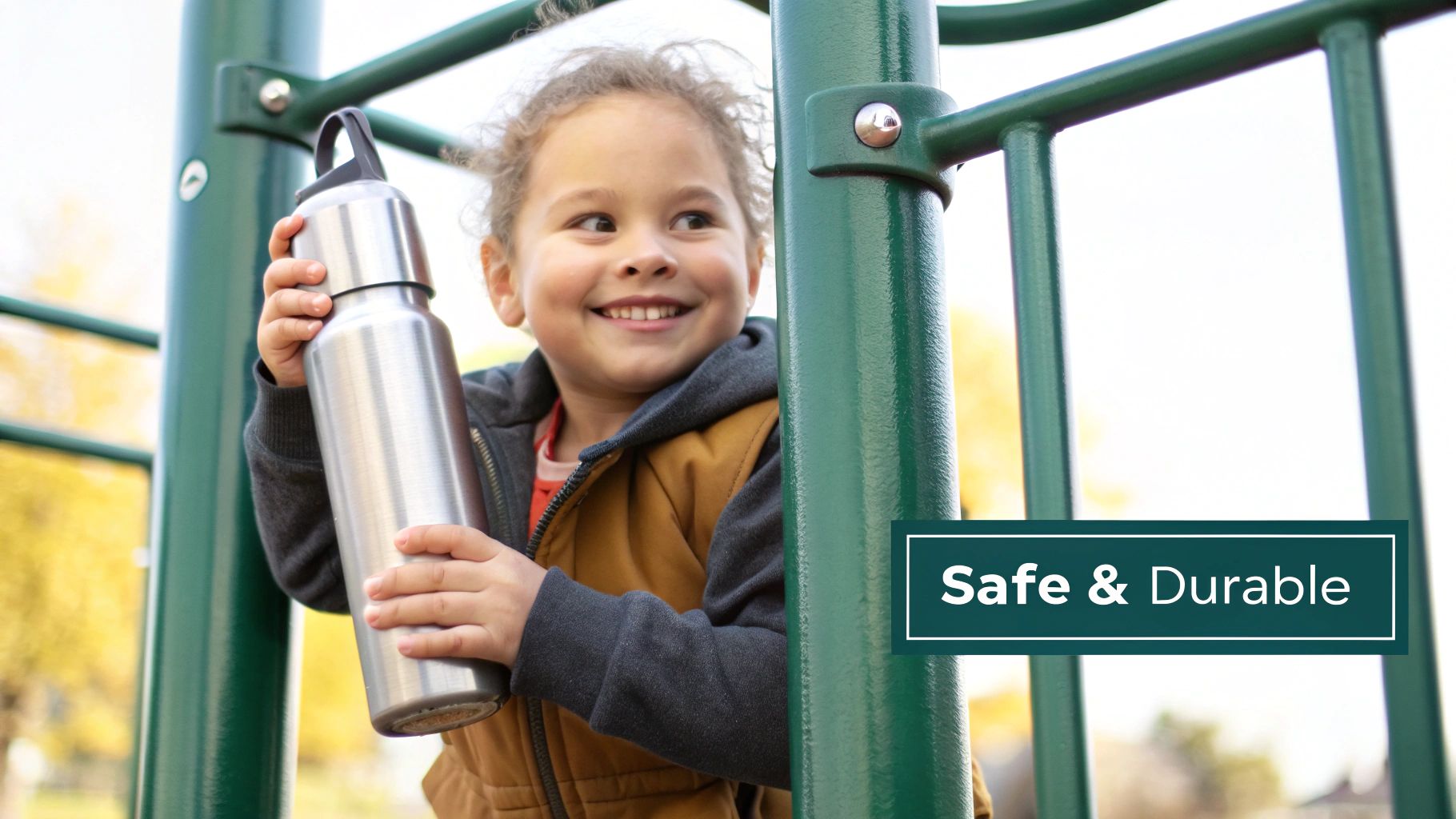
Unmatched Durability for Playground Adventures
Let's be honest, kids are experts at breaking things. Water bottles are no exception! But while plastic bottles crack and glass ones are an accident waiting to happen, a stainless steel bottle is built for the rough and tumble of kid life.
It can handle being dropped at the park, chucked into a school bag, and left to roll around in the back of the car. This thing is built to last. That durability means you buy it once and it can stick with them for years, which is a big win for your wallet and the planet.
A Safe and Pure Choice for Hydration
As parents, we're always thinking about what's safe for our kids to eat and drink from. This is where stainless steel really shines. It's a non-reactive material, which is a fancy way of saying it won't leach nasty chemicals into your child's water, even when it's left in a hot car.
You get total peace of mind knowing their drink is free from BPA, phthalates, and other chemicals often found in plastics. We go into more detail on this in our guide on why it's so important to go non-toxic for babies and kids.
Stainless steel offers a clean, inert surface that doesn’t hang onto old flavours or smells. That means today’s water won’t taste faintly of yesterday’s apple juice—just a fresh, pure sip every single time.
Keeping Drinks Perfectly Chilled
There's nothing quite as unappealing as a lukewarm drink on a sweltering sports day. Insulated stainless steel bottles are absolute champions at temperature control, keeping water refreshingly cold for up to 24 hours. It’s a simple thing, but it makes a huge difference in encouraging kids to actually drink their water and stay hydrated.
You can see this shift happening all over the country. The Australian market for reusable water bottles is growing fast as more families and schools ditch single-use plastics for better, healthier options. If you want to get really into the nitty-gritty of different materials, this guide to choosing between titanium and stainless steel water bottles offers some fantastic insights.
Understanding What Makes a Great Steel Bottle
When you're browsing the shelves, it’s easy to think all shiny bottles are created equal. But the small details are what separate a truly great kids stainless steel water bottle from one that just looks the part. Let's get into the nitty-gritty so you can feel completely confident in your choice.
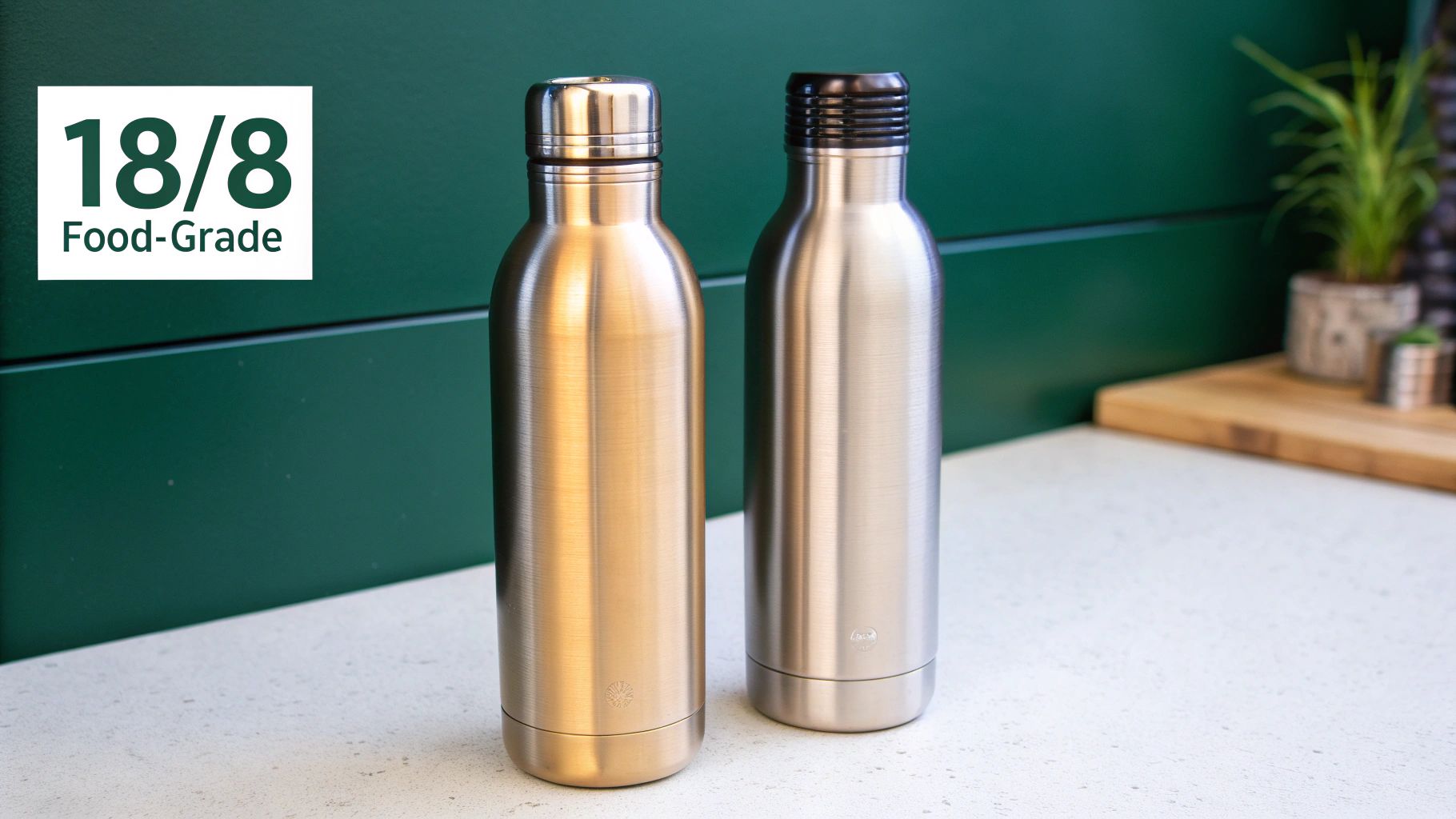
Why 18/8 Food-Grade Steel Matters
You’ve probably seen the term 18/8 food-grade stainless steel pop up on high-quality bottles. This isn’t just marketing fluff; it’s a specific marker of quality and safety that really does make all the difference. Think of it as the recipe for the steel itself.
The "18/8" simply refers to its composition: 18% chromium and 8% nickel. This exact blend is considered the gold standard for some very important reasons.
- Rust and Corrosion Resistance: The chromium creates a natural, invisible shield that protects the steel from rust and stains, even when it’s constantly sloshing around with water or juice.
- Purity of Taste: That nickel content boosts its durability and, crucially, ensures the steel is non-reactive. This is what stops that yucky metallic taste from leaching into your child’s drink, which can happen with lower-grade metals.
- Exceptional Durability: This combo results in a seriously strong material that can handle the daily reality of kid life—the drops, the bangs, the tumbles—without falling apart.
Basically, choosing 18/8 steel is your guarantee that you’re getting a bottle built to last, one that won't mess with the flavour or safety of what's inside. It’s peace of mind in a bottle.
Single Wall vs Double Wall Insulation
Once you’ve got the steel quality sorted, the next big decision is about insulation. Whether you go for a single-wall or a double-wall bottle really just comes down to how your child will be using it.
A single-wall bottle is exactly what it sounds like—a single layer of stainless steel. It’s lightweight, simple, and a fantastic choice for basic hydration at home or for short outings where keeping the drink icy cold isn’t a priority.
A double-wall insulated bottle is a bit more high-tech. It’s built with two layers of stainless steel with a vacuum-sealed space between them. That vacuum is where the magic happens; it stops heat from getting in or out, keeping cold drinks cold and warm drinks toasty for hours.
For a day at the beach, a long car ride, or a full day at school, double-wall insulation is a game-changer. It means your child has a refreshing, cool drink waiting for them long after you've filled it up, which can make all the difference in getting them to stay hydrated on a hot Aussie day.
Insulation Showdown: Single Wall vs Double Wall
Picking the right insulation can feel tricky, but it's really about matching the bottle to your day-to-day life. This quick comparison should make it crystal clear.
| Feature | Single-Wall Stainless Steel | Double-Wall Insulated Stainless Steel |
|---|---|---|
| Best For | Quick trips, indoor use, and when weight is the top priority. | All-day outings, school, sports, and keeping drinks hot or cold. |
| Temperature | Does not retain temperature; the outside feels cool or warm. | Keeps drinks cold for up to 24 hours or warm for up to 12 hours. |
| Weight | Lighter and easier for very young children to carry. | Slightly heavier due to the extra layer of steel and vacuum seal. |
| Condensation | Can "sweat" with cold drinks, making bags and hands damp. | No condensation, so it stays dry on the outside. |
| Cost | Generally more affordable. | A bit more of an investment, but offers superior performance. |
So, if you need a lightweight bottle for around the house, single-wall is perfect. But for a bottle that will keep water crisp and cool through a whole day of school or sport, double-wall is absolutely worth it.
Safe and Non-Toxic Exteriors
It's a universal truth of parenting: if a child can get something to their mouth, they will chew on it. That's why the outside of the bottle is just as important as the inside. A cute design is great, but the paint or coating has to be completely safe for little mouths.
Look for bottles that use lead-free, non-toxic paints and durable powder coatings. A powder coat is a finish that’s applied as a dry powder and then baked on. It’s known for being much tougher against chipping and scratching than regular paint, which means it looks good for longer and, more importantly, won't flake off.
Good brands are always upfront about their materials. When you're shopping, scan the product description for phrases like "BPA-free," "lead-free," and "non-toxic finish." At Hello Charlie, we only stock brands that meet these high safety standards, so you can choose any design with total confidence. This focus on every little detail is what makes a kids stainless steel water bottle a truly safe and practical choice for your family.
Choosing the Perfect Leak-Proof Lid for Your Child
The body of a kids stainless steel water bottle is only half the story. The lid is where the real action happens, and getting it right can mean the difference between a happy, hydrated kid and a soggy school bag sent home in a plastic bag of shame.
It's the part your child will use the most, so it has to be simple for little hands to manage but tough enough to survive being knocked around.
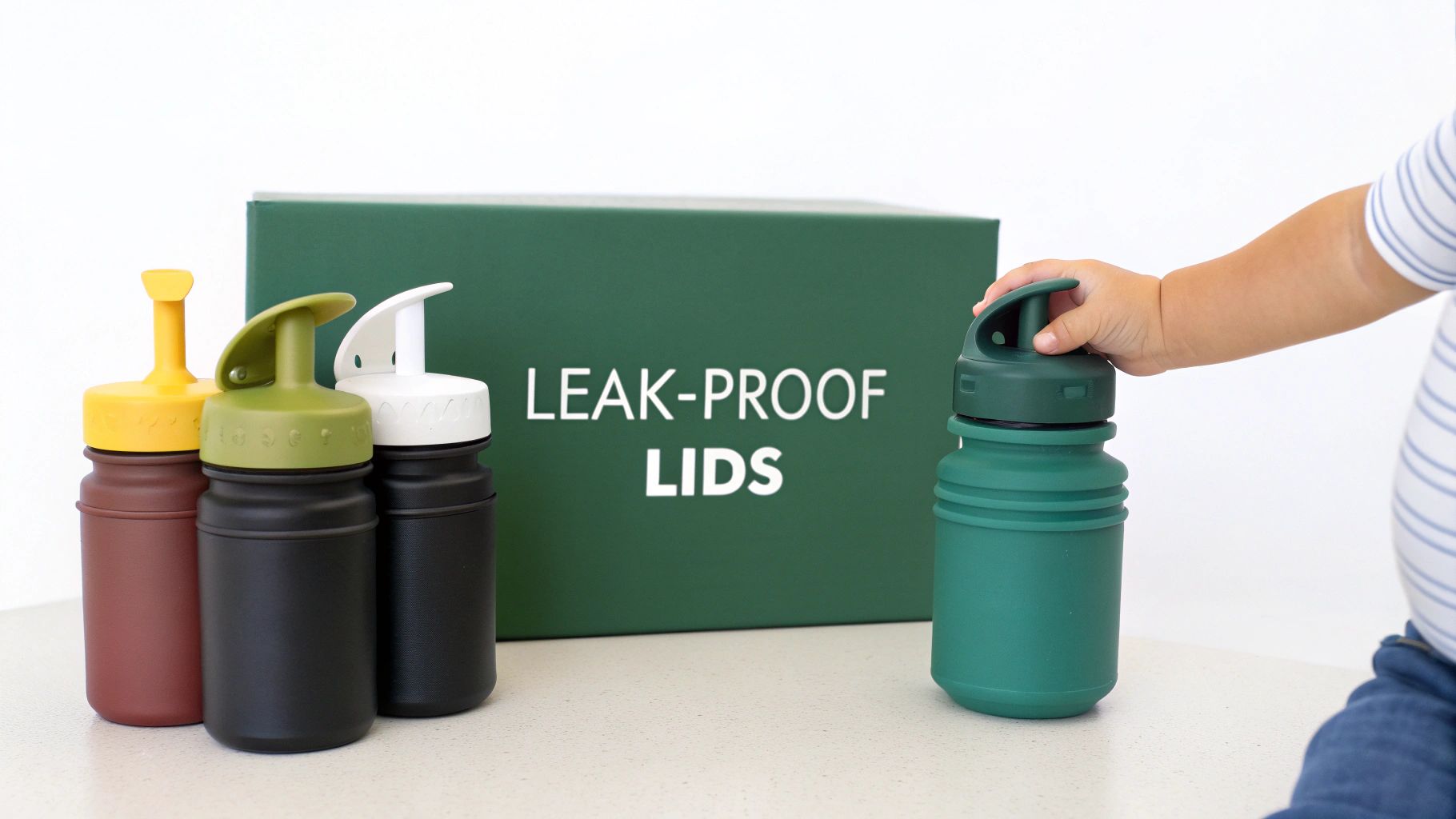
But just as importantly, it needs to be easy for us to clean properly. Those hidden nooks and crannies in some fancy lids can become a five-star hotel for mould and bacteria if you're not careful. Let’s walk through the common lid types so you can find one that’s safe, functional, and frustration-free.
Straw Lids for Easy Sipping
There's a reason straw lids are a massive hit with toddlers and younger kids. They’re super intuitive. Little ones can sip without having to tip the bottle right up, which means fewer spills, especially when they're strapped into a car seat or a stroller. It’s a brilliant design for encouraging them to drink more water on their own.
That convenience, however, does come with a cleaning catch. Straw lids have more fiddly bits—the straw itself, the mouthpiece, and often a valve inside. To stop grime from building up, you really need to pull it all apart for a good clean. Always look for designs where every component, including the silicone seal, can be easily removed. A simple, thoughtfully designed option like the Re-Play Straw Cup with Reusable Straw shows how having just a few easy-to-clean parts makes all the difference.
Sports Spouts for Active Kids
Once kids get a bit older and are constantly on the move, a classic sports spout (or sipper lid) is a fantastic, practical choice. These are made for grabbing a quick drink on the go. A simple pull or flip of the spout and they can get a gulp of water during soccer practice or a run around the playground.
Generally, these are much easier to clean than straw lids because there are fewer complex parts. The main thing to look out for is a quality, BPA-free spout and a design that gives you a really secure seal when it's closed. A good sports cap should click firmly shut, giving you peace of mind that it won’t pop open inside a backpack.
Simple Screw Caps for Older Children
For primary-school-aged kids and beyond, you honestly can't beat the simplicity and reliability of a classic screw-top lid. This design is easily the most leak-proof of the lot, making it the one you can toss into a full school bag without a second thought.
Thanks to its no-fuss design, a screw cap is also the easiest to clean—no hidden valves or tiny spouts to scrub. Just a quick wash and it’s good to go. While it might not be as handy for a quick sip during sport, its total dependability is a huge plus for everyday school and travel use.
No matter which lid you choose, always check for a silicone ring or gasket inside. This little component is the secret hero that creates the airtight seal. Just make sure it’s removable so you can get in and clean underneath it properly.
What Makes a Lid Genuinely Leak-Proof and Easy to Clean?
That dream combination of a truly leak-proof lid that isn't a nightmare to clean often comes down to a few clever design features. When you're weighing up your options, keep this checklist in your back pocket:
- Minimal Parts: The fewer nooks, crannies, and separate pieces, the easier it is to clean. Simple is almost always better.
- Removable Seals: This is non-negotiable. You must be able to pop out any silicone seals for a thorough wash to prevent mould.
- Secure Closure: Whether it’s a screw thread or a flip-top, it should feel solid. You want a definitive click or a tight twist that tells you it's properly sealed.
- Dishwasher-Safe Materials: While handwashing is often best, being able to pop the lid on the top rack of the dishwasher is a lifesaver for a deep clean. Always double-check the manufacturer's advice first.
Getting the Right Size and Keeping It Clean
A water bottle is only as good as the kid who actually uses it. A bottle that’s too heavy for a preschooler will just get left behind, while one that’s too small will leave an older kid parched long before the home-time bell.
Finding that sweet spot between size, weight, and capacity is the key to keeping them happily hydrated. Once you’ve nailed the perfect fit, keeping it fresh and hygienic is the next puzzle piece. A simple, non-toxic cleaning routine will make sure your child's bottle lasts for years, turning it into a brilliant investment for their health and your peace of mind.
Let's dive into the practical side of things.
Choosing the Right Bottle Size by Age
Picking the right capacity isn’t about following strict rules, but more about matching the bottle to your child's age, what they’re doing, and what they can realistically carry. A bottle that’s too big and clunky is just as useless as one that’s empty by morning tea.
Here’s a rough guide to help you choose a kids stainless steel water bottle that’s just right:
- Toddlers (1-3 years): Think small and light. Something around 250-350ml is perfect. At this age, it’s all about them being able to handle it themselves. This size is manageable for their little hands to grip and sip from, and it won’t weigh down your nappy bag.
- Preschoolers (3-5 years): As they start running around more, you can confidently size up to 350-500ml. This is a great capacity for a few hours at kinder or a trip to the park. It provides enough water without being too much for them to carry in their own little backpack.
- Primary School Kids (5-12 years): For a full day at school, you'll want to look in the 500-750ml range. This holds enough water to get them through classes, lunch, and even after-school sport, meaning fewer trips to the bubbler.
A little tip: remember that insulated bottles are a bit heavier than single-wall ones of the same size. If weight is a big factor for your little one, you might want to choose a slightly smaller insulated bottle.
Your Simple and Non-Toxic Cleaning Routine
Keeping a stainless steel bottle clean is surprisingly simple, and you definitely don’t need any harsh chemicals to get the job done. A consistent routine stops that funky smell from ever developing and nips any nasty build-up in the bud.
Honestly, the goal is just to make it a habit, so cleaning the bottle is as automatic as packing their lunch.
For a daily clean, a quick wash with warm, soapy water is all it takes. Give it a good swish, use a bottle brush to scrub the inside, and pay extra attention to the screw threads on the lid where gunk loves to hide. Rinse it really well and let it air dry completely overnight with the lid off. This prevents moisture from getting trapped, which is what causes those musty odours.
Tackling Smells and Stains Naturally
Even with daily washing, you might sometimes notice a lingering smell or see a bit of build-up. That just means it’s time for a deep clean, and you probably already have the best non-toxic solutions sitting in your pantry.
Here are two foolproof methods:
- The Bicarb Soda Paste: Mix a couple of tablespoons of bicarb soda with a tiny bit of water to make a paste. Use your bottle brush to scrub this paste all around the inside of the bottle. Let it sit for about 15 minutes, then give it a thorough rinse. Bicarb soda is a fantastic natural deodoriser and a gentle abrasive.
- The Vinegar Soak: Pour white vinegar into the bottle until it’s about a fifth of the way full, then top it up with warm water. Let it soak for a few hours or even overnight. The vinegar works wonders at breaking down any residue or mineral deposits. Just be sure to rinse it extra well afterwards to get rid of any vinegar taste!
These natural cleaning tricks are safe, cheap, and they work a treat. By spending a couple of minutes on it each day and doing a deep clean every week or so, you’ll keep your child’s stainless steel bottle in pristine condition for many adventures to come.
Making a Positive Impact with Every Sip
Choosing a kids stainless steel water bottle is so much more than just a practical decision. Think of it as a small but powerful vote for the kind of world you want your children to grow up in. Every time they take a sip, you're creating a positive ripple effect that starts right in your own home and reaches all the way to our beautiful Aussie coastlines.
When you ditch single-use plastics, you’re taking a direct stand to protect our incredible marine life and keep our beaches pristine. Each reusable bottle means one less piece of plastic that might clog up a landfill or, worse, find its way into our oceans. It's a tiny act that adds up to a massive impact.
More Than Just a Bottle
But it's not just about reducing waste. Opting for something durable and long-lasting teaches our kids a really important lesson about conscious consumption. It shows them that the things we own are meant to be cared for and used over and over, rather than being instantly disposable.
This simple, everyday habit helps lay the groundwork for a more sustainable mindset as they get older. If you're keen to build on this, you can find some fantastic ideas and concrete actions for raising eco-friendly children.
This is about celebrating how small, intentional habits, when practised by thousands of families just like yours, add up to create huge, meaningful change for a healthier planet.
Building Eco-Conscious Habits
Instilling these values doesn't need to be a big lecture; it’s all in the small, consistent things you do together as a family. Choosing to refill a bottle is a tangible way for a child to get involved in looking after the environment, connecting their daily actions to a much bigger purpose.
These everyday choices build a powerful story about caring for our world. If you're looking for more ways to cut down on waste at home, our Plastic Free July guide is packed with practical tips that make a real difference. By embracing reusable options, you're not just making a safer choice for your family's health—you're actively shaping a greener future. It’s about that good feeling you get knowing your purchase aligns perfectly with your values, making a positive impact with every single sip.
Your Ultimate Bottle Buying Checklist
Feeling ready to choose the perfect bottle? I get it, there’s a lot to remember. To make it easier, I’ve boiled everything down into one simple checklist. Think of it as your cheat sheet for comparing brands and making a choice you feel genuinely good about.
Use these pointers while you’re browsing online or in-store. They'll help you tick all the boxes for safety, practicality, and durability, ensuring you pick a bottle that’s not just cute, but a truly sound investment in your child's health.
Material and Safety Checks
Before you get wooed by the pretty colours or cool designs, let's start with the non-negotiables. This is the stuff that really matters for keeping your child's drink pure and safe.
- 18/8 Food-Grade Stainless Steel: Dig into the product description and look for this exact spec. It's your guarantee that the bottle is rust-proof and won’t make the water taste metallic.
- BPA-Free and Phthalate-Free Lid: The lid is just as critical as the bottle itself. Double-check that all the bits that touch your child's drink (and mouth!) are made from safe, non-toxic materials like polypropylene (#5) or silicone.
- Non-Toxic Exterior Coating: Look for terms like "lead-free paint" or "durable powder coating". This is your peace of mind that even if the bottle gets a good chew, it’s completely safe.
Practicality and Functionality
Right, with the safety sorted, let's think about how this bottle will actually fit into your family's life. After all, the best bottle is the one your kid actually loves and uses every single day.
- Age-Appropriate Size: Is it light enough for your toddler to lug around? Does it hold enough for a full day at school, or just a quick trip to the park?
- Easy-to-Clean Lid: This is a big one. Can you pull the whole lid apart? You want to be able to remove any silicone seals or straws for a proper scrub to keep that nasty mould at bay.
- Leak-Proof Design: Look for a lid with a secure closure. A solid click or a tight screw thread is a good sign it’ll survive being bounced around in a school bag without creating a soggy mess.
- The Right Insulation: Do you need a double-wall insulated bottle to keep their water icy cold all day, or is a lighter single-wall bottle perfectly fine for shorter outings?
With this list in hand, you're all set. You can now shop with the confidence that you know exactly what to look for in a safe, practical, and genuinely eco-friendly bottle for your little one.
Frequently Asked Questions
When you're trying to make the best choice for your little one, it's natural for a few questions to pop up. To help you feel completely confident in your decision, we’ve put together answers to some of the most common things Aussie parents ask about kids' stainless steel water bottles.
Can I Put Warm Drinks in a Stainless Steel Bottle?
That really depends on the bottle. You should never put hot liquids in a single-wall stainless steel bottle. Because it's just one layer of metal, the outside becomes scorching hot almost instantly, creating a serious burn risk for little hands.
On the other hand, double-wall insulated bottles are brilliant for warm drinks (think warm, not boiling!). They'll keep a hot chocolate or soup cosy for hours, and the outside will stay completely cool to the touch. Just be sure to check the manufacturer's guidelines and always test the temperature yourself before giving it to your child.
How Unbreakable Are Stainless Steel Bottles, Really?
They are incredibly tough! A quality stainless steel bottle is built to withstand the reality of life with kids—the drops, the tumbles from the pram, and the bumps at the playground. While they aren't 100% indestructible (a massive fall onto concrete might leave a dent), this cosmetic damage rarely impacts how they work.
Think of those dents as badges of honour from countless adventures! If a double-wall bottle gets a very severe dent, it could break the vacuum seal and reduce its insulating power, but it will still be perfectly safe to drink from.
This visual guide can help simplify the key decision points when you're on the hunt for a safe, practical bottle.
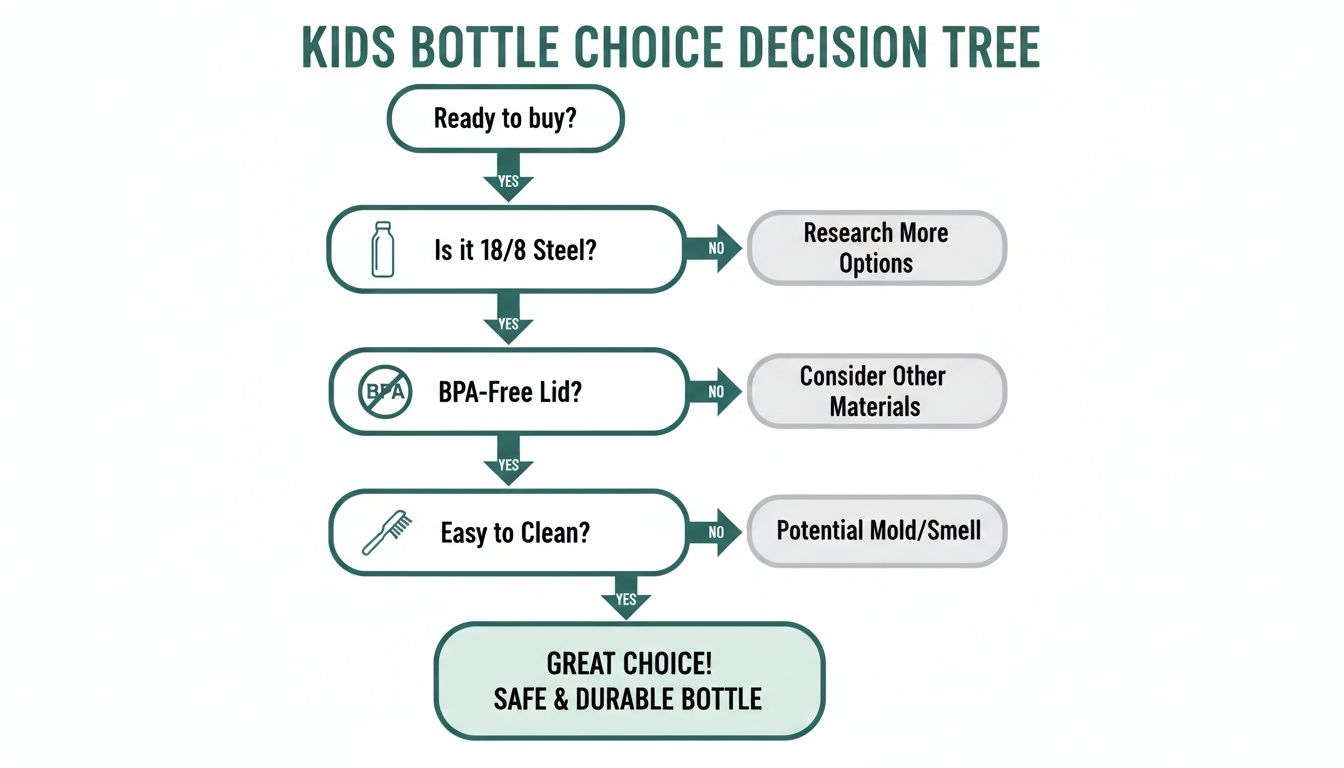
As you can see, confirming the bottle is made from 18/8 food-grade steel, has a BPA-free lid, and features an easy-to-clean design are the most critical steps to finding the perfect match.
How Do I Get Rid of a Funny Smell in the Bottle?
A lingering smell usually just means a bit of residue is hiding in there. A simple, natural deep clean is the best fix and is much safer than reaching for harsh chemicals.
Here’s our tried-and-true method:
- Fill the bottle with a mix of one part white vinegar to four parts water.
- Alternatively, you can make a paste with bicarb soda and a small amount of water to coat the inside.
- Let your chosen solution sit for a few hours (or even overnight).
- Give it a really good scrub with a proper bottle brush and rinse everything out thoroughly.
Of course, the best way to prevent smells is to wash it after every use and let it air dry completely with the lid off.
Are Dents in the Bottle a Safety Risk?
Generally, no. Dents are almost always just cosmetic. They don't make the bottle unsafe to use. The food-grade stainless steel is a very stable material; it won’t start to flake off or leach chemicals just because it has a new dimple.
The only time a dent might be a problem is if it creates a sharp edge (which is very rare) or if it damages the screw thread on the neck, which could cause a leak. Otherwise, a dented bottle is just a well-loved bottle that's full of stories!
Feeling ready to find the perfect hydration buddy for your little adventurer? Explore our carefully curated range of non-toxic and eco-friendly options right here at Hello Charlie.


