



A Parent's Guide to Newborn Baby Nappies in Australia
So, you’re having a baby! Welcome to one of life's most exciting—and let's be honest, slightly overwhelming—adventures. As you start nesting and preparing for your little one's arrival, the nappy aisle can feel like a surprisingly daunting place. Eco-disposables, modern cloth, bamboo… what does it all mean?
This guide is here to cut through the noise. We'll help you figure out what’s best for your baby, your budget, and your lifestyle, so you can feel confident in your choice.
Your Guide to Choosing the Right Newborn Nappies
Stepping into the world of nappies for the first time can feel like learning a new language. You're suddenly faced with terms like 'eco-friendly', 'chlorine-free', and 'plant-based' on every packet, and it's easy to feel a bit lost. But don't you worry—we're here to break it all down for you.
Our goal is to give you gentle, evidence-based advice so you can make safe, sustainable choices for your baby's super delicate skin.
Think of this as your go-to resource for understanding what really matters in a nappy. We'll walk you through:
- The different types of newborn nappies you’ll find in Australia.
- How to spot a genuinely non-toxic nappy that’s kind to sensitive skin.
- Tips and tricks for getting that perfect fit to avoid dreaded leaks.
- Practical advice for those first few weeks, giving you one less thing to stress about.
Choosing the right nappy is a big deal. It affects your baby's comfort, your wallet, and the planet. It’s a huge market too—the Australian baby personal care sector pulled in over USD 616.1 million back in 2020, with nappies making up most of that. When you consider that the average newborn goes through up to 2,500 nappy changes in their first year alone, it’s no wonder parents want to get it right.
We believe in empowering parents with clear, honest information. There's no single 'best' choice for everyone, but there is a best choice for your family. We'll help you find it.
As you get everything ready for your baby's arrival, picking the right newborn nappies is just one piece of the puzzle. It sits alongside figuring out all the other first-time mum essentials you'll need. We’ll lay out the pros and cons of each nappy type without judgement, supporting you every step of the way on this incredible journey.
Comparing Your Newborn Nappy Options
Choosing the right nappy for your newborn can feel like a massive decision, but it’s less about making a permanent choice and more about finding what works for you right now. In Australia, parents generally head down one of three main paths: standard disposables, eco-disposables, or modern cloth nappies (MCNs).
Each option has its own pros and cons, and what’s a perfect fit for your best friend’s family might not be the right one for yours. So, our goal here isn't to crown a winner. It’s to give you a clear, honest look at each one—comparing things like convenience, cost over time, what they're made of, and their environmental footprint. That way, you can find the best match for your lifestyle and values.
Understanding the Main Nappy Types
First up, let's get our heads around the basic lingo. You'll hear these terms thrown around a lot, so knowing what they mean is a great place to start.
-
Standard Disposable Nappies: These are the ones you see lining the shelves of every major supermarket. They're built for single use and are famous for their convenience and super-absorbent cores. The downside is they're typically made from petroleum-based plastics and can contain things like artificial fragrances and chlorine.
-
Eco Disposable Nappies: This is our specialty here at Hello Charlie. Eco disposables are also single-use, but they're made with a much greater focus on sustainable, skin-friendly materials. Think plant-based plastics (from things like corn starch), pulp from responsibly managed forests, and a firm 'no' to chlorine, fragrances, and lotions.
-
Modern Cloth Nappies (MCNs): Forget the old terry towelling squares and fiddly safety pins. Today's cloth nappies are a whole different world. MCNs are reusable nappies made from soft, effective fabrics like bamboo, organic cotton, or hemp. They’re designed to be user-friendly with simple snaps or velcro tabs. While there's a bigger upfront cost and a washing routine to get into, they can save you a lot of money and massively reduce your household waste.
If you want to go even deeper into the nitty-gritty of each style, our comprehensive guide on cloth, hybrid, and disposable nappies is a fantastic next read.
Comparing Newborn Nappy Options
To make things even clearer, here’s a quick comparison table. It’s designed to help you see, at a glance, how the different nappy types stack up against each other on the factors that matter most to new parents.
| Feature | Standard Disposables | Eco Disposables | Modern Cloth Nappies (MCNs) |
|---|---|---|---|
| Convenience | Highest - just use and toss. Widely available. | High - also single-use. May require online ordering or a trip to a specialty store. | Lower - requires washing, drying, and assembly. Not ideal for travel without a plan. |
| Upfront Cost | Low - you only need to buy one pack at a time. | Low to Medium - slightly more expensive per nappy than standard brands. | High - you need to buy a full "stash" of 20-24 nappies to get started. |
| Long-Term Cost | High - continuous purchasing adds up to thousands of dollars per child. | High - also a continuous purchase, often costing more than standard disposables. | Low - after the initial investment, the ongoing costs are just water and detergent. |
| Skin Friendliness | Can contain fragrances, lotions, and chlorine which may irritate sensitive skin. | Excellent - free from harsh chemicals, perfumes, and lotions. Uses gentler materials. | Excellent - made from natural, breathable fabrics like cotton, bamboo, and hemp. |
| Environmental Impact | High - made from non-renewable resources and contributes significantly to landfill. | Lower - uses more sustainable, plant-based materials and avoids harsh chemicals. | Lowest - drastically reduces landfill waste. Water and energy use for washing. |
Remember, there's no single "best" choice, only what's best for your family. Many parents even find a hybrid approach works wonders, mixing and matching to suit different situations.
A Closer Look at Modern Cloth Nappies
If you’re leaning towards cloth, you’ll be pleased to know it’s much simpler than it sounds. MCNs are designed to be as easy as disposables, and they come in several styles that are great for tiny newborns.
This infographic really puts into perspective the sheer volume of nappies we’re talking about in Australia. It highlights why making a conscious choice can have a big collective impact.
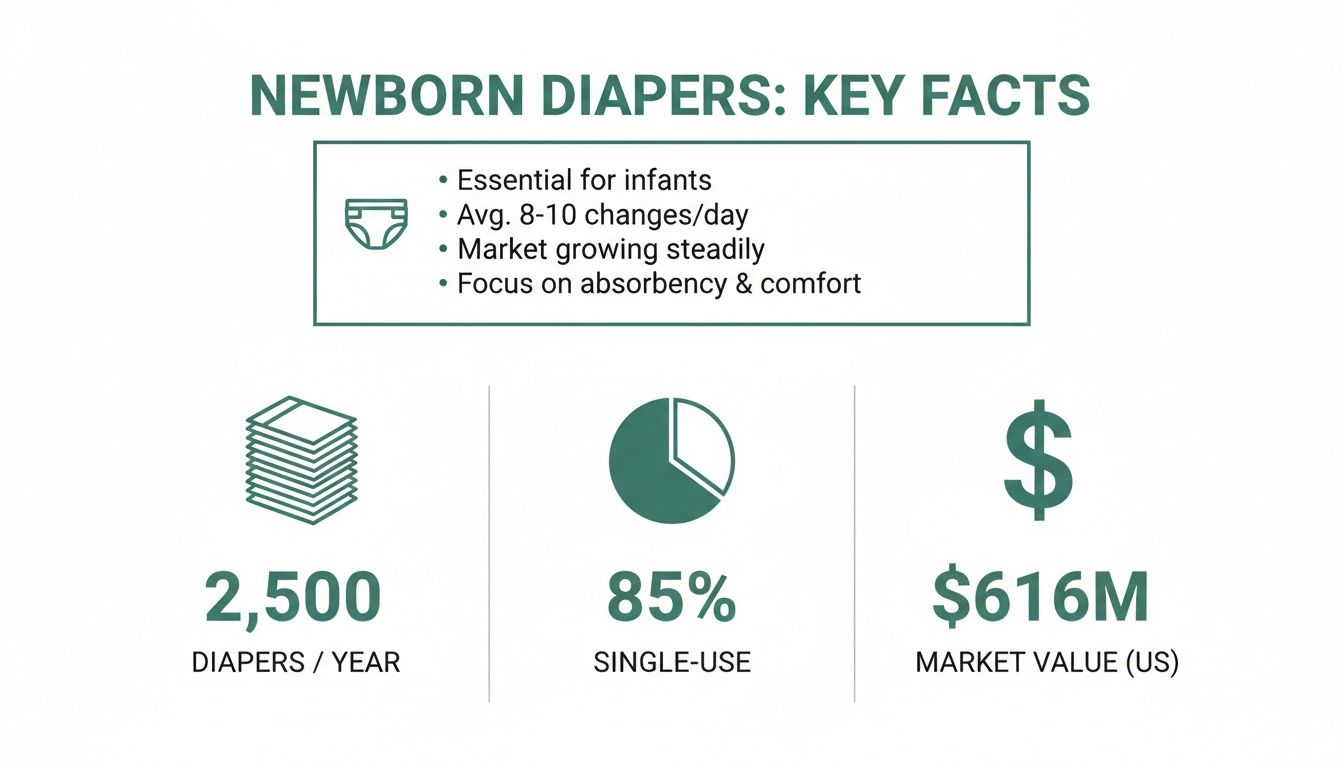
These numbers aren't here to scare you, but to show that every little bit helps. And remember, getting started with cloth doesn't have to be all or nothing. So many families begin by using cloth at home and sticking with eco-disposables for outings or daycare. It’s all about finding a rhythm that works for you.
Choosing Safe Materials for Your Baby’s Skin
There’s nothing quite like a newborn’s skin. It’s unbelievably soft and new, but it’s also incredibly delicate. In fact, it's up to five times thinner than an adult’s and far more absorbent, meaning things can soak in much more easily. This is why what you put against your baby’s skin 24/7 really matters—especially when it comes to nappies.
Here at Hello Charlie, we’re obsessed with what goes into the products we stock. We believe parents deserve total transparency, and our goal is to empower you with knowledge, not create more worry. Understanding what to look for on a nappy packet means you can confidently make a choice that’s gentle on your baby’s sensitive skin.
Decoding the Nappy: What to Avoid
Staring at the nappy aisle, it’s easy to get drawn in by claims like "extra soft" or "super absorbent". But the real story is found in the ingredients list. Here are a few common additives in standard disposable nappies that are best avoided, particularly for a newborn.
-
Fragrances (Perfumes): That “baby fresh” smell? It's often created by a cocktail of chemicals. Fragrance formulas are considered trade secrets, so brands don’t have to tell you what’s in them. These unknown ingredients can be major irritants and a common culprit behind nappy rash.
-
Lotions and Dyes: Just like fragrances, lotions and cute colourful patterns can contain chemicals that might cause a reaction. A truly gentle newborn nappy doesn’t need any of these extras. When it comes to sensitive skin, simpler is almost always better.
-
Chlorine Bleaching: Chlorine is often used to get that bright white look in the nappy’s pulp core. Unfortunately, this process can create dioxins, which are nasty environmental pollutants. Opting for nappies labelled Totally Chlorine Free (TCF) is a much safer choice for your baby and the planet.
-
Phthalates and Parabens: These are chemicals often used to make plastics more flexible and as preservatives. They’re potential endocrine disruptors, so it’s wise to choose brands that explicitly state they are free from them, especially for a product in constant contact with your baby.
The Power of Plant-Based and Non-Toxic Materials
So, what should you look for instead? The good news is that the demand for cleaner, greener nappies is growing fast. Australian parents are more aware than ever, and it shows. By 2025, eco-nappies had already captured 25-30% of the market share, and surveys revealed that 40% of parents now prefer organic materials for their little ones. This is all part of a wider green parenting movement, especially in cities like Sydney and Melbourne, where around 70% of families actively seek out sustainable choices. You can read more about the rise of eco-friendly baby products in Australia.
This shift in what parents want has pushed brands to create some amazing innovations. Modern eco-nappies now use gentle, plant-derived materials that work brilliantly while being kind to the earth.
Think of a nappy’s core like a sponge. A standard nappy uses a synthetic, petroleum-based sponge. An eco-nappy, on the other hand, uses one made from natural, renewable resources like wood pulp or bamboo. Both get the job done, but one is much gentler on the skin and the environment.
The absorbent core in almost all disposable nappies, including the eco ones, contains something called Super Absorbent Polymers (SAPs). The name might sound a bit intense, but SAPs are generally considered safe, non-toxic, and incredible at locking moisture away to keep your baby's skin dry. If you want to dive deeper into the science, we explain exactly what SAPs are and why they're safe in nappies in our detailed guide.
Choosing nappies made from materials like sustainably sourced wood pulp or soft, breathable bamboo offers real peace of mind. You’re not just protecting that perfect baby skin from potential irritants; you’re also supporting a more sustainable future.
How to Get the Perfect Nappy Fit
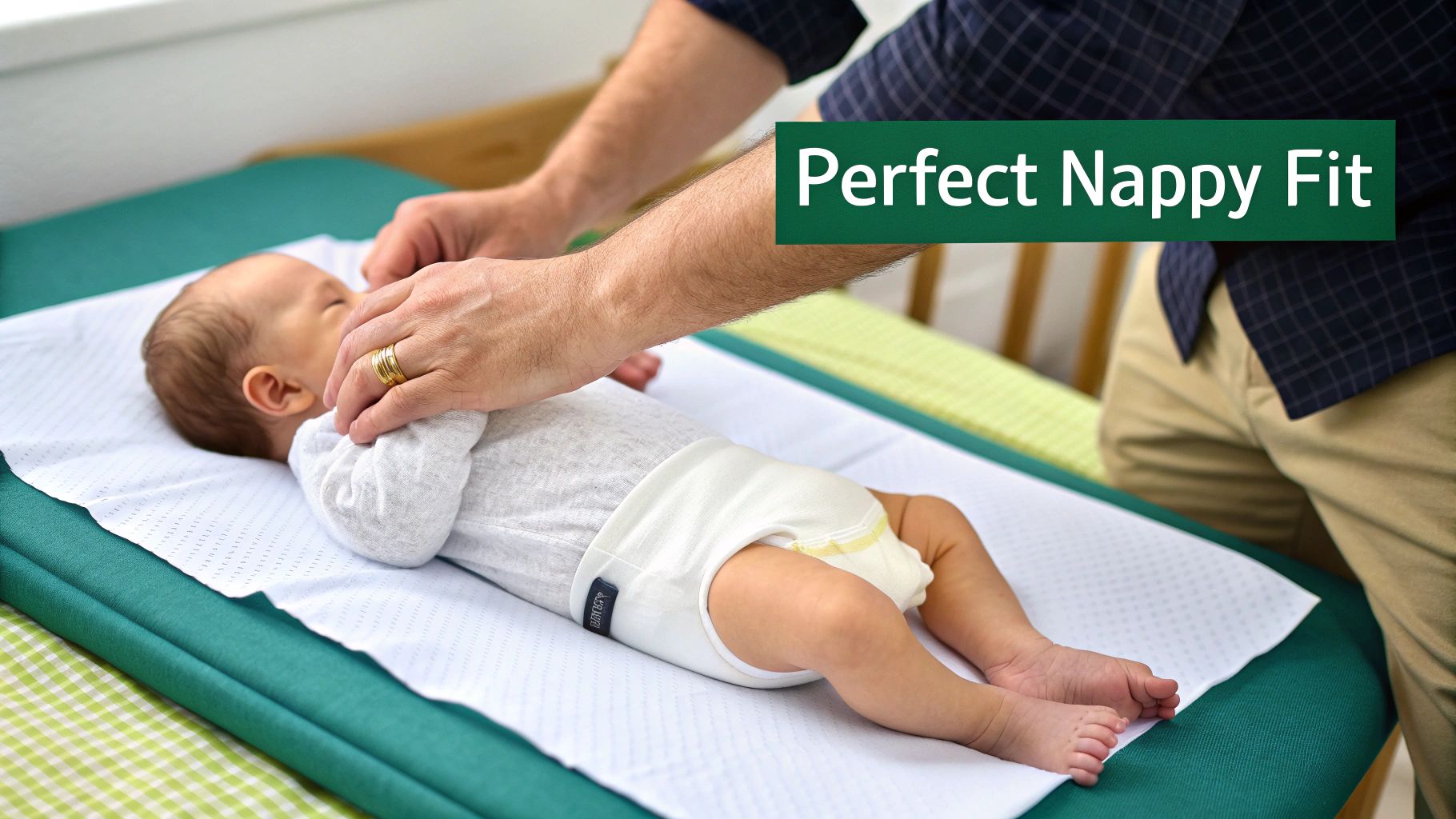
Leaks and blowouts are a rite of passage for new parents, but getting the nappy fit just right can turn them from a daily disaster into a rare surprise. A poorly fitting nappy isn't just about mess; it can be genuinely uncomfortable for your baby, causing chafing and angry red marks. Nailing the fit comes down to two things: picking the right size and knowing how to put it on properly, especially around that delicate little umbilical cord stump.
Think of it like a pair of shoes. Too small, and they'll pinch. Too big, and they'll slip around, failing completely at their job. It's the exact same logic for newborn nappies.
Finding the Right Newborn Nappy Size
Most nappy brands, whether they're eco-disposables or the ones you grab at the supermarket, use weight as a guide. A 'Newborn' or 'Size 1' nappy is generally designed for babies up to about 5 kg.
But here's the thing: your baby's weight is just a starting point. Every little one is shaped differently, with chunky thighs or a tiny waist, so what fits one baby perfectly might be a disaster on another. The real test is what you can see.
A well-fitting nappy should have:
- A Snug Waistband: You want it to sit neatly just below their belly button. A good rule of thumb is that you should be able to slide two fingers between the nappy and your baby’s tummy—this means it's secure enough to stay up but not so tight it's digging in.
- No Gaps Around the Legs: The leg cuffs are your best defence against leaks. Once the nappy is on, gently run your finger around the elastic edges to make sure they're fanned out and sitting snugly in the crease where their leg meets their groin. You shouldn't see any gaps.
- Good Bottom Coverage: The nappy should comfortably cover your baby’s entire bottom. If it looks more like a G-string, it’s a sure sign it's too small or hasn't been pulled up high enough at the back.
If you're constantly fighting leaks or seeing deep red marks on your baby’s skin when you take the nappy off, it’s almost always a sign to reassess the size. Don’t feel like you have to finish the pack—just move up to the next size if the fit isn't working.
For a deeper dive into navigating sizes as your baby grows, check out our comprehensive guide to choosing the right nappy sizes.
Caring for the Umbilical Cord Stump
For the first couple of weeks, you’ll also need to think about your baby’s umbilical cord stump. The goal is simple: keep it clean and, most importantly, dry. Allowing air to circulate helps it heal and fall off naturally, which usually happens within 5 to 15 days.
A nappy that constantly rubs against the stump can cause irritation and trap moisture, which is the last thing you want.
Luckily, the solution is easy. You have two options:
- Fold it Down: With any standard newborn nappy, you can simply fold the top edge down at the front, creating space so it sits well below the stump.
- Choose a Nappy with a Cutout: Some brands have already done the work for you, designing their newborn nappies with a little U-shaped notch at the front to leave the stump exposed to the air.
This tiny adjustment makes a world of difference to your newborn's comfort in those early days. It's one of those super practical tips you'll be glad you knew from the very first nappy change.
How Many Newborn Nappies Do I Actually Need?
It’s the question every parent-to-be asks: "Just how many newborn nappies should I buy?" The nesting instinct might tell you to stockpile mountains of them, but a bit of savvy planning will save you a lot of money, space, and last-minute stress. Let’s break down the numbers and come up with a plan that actually works.
First things first, a newborn will go through a staggering 8 to 12 nappies every 24 hours. Yes, you read that right. Their bladders are tiny and they feed around the clock, which means nappy changes are a constant feature of those early weeks. Do the maths, and you’re looking at somewhere between 240 and 360 nappies in the first month alone.
But hold on—this doesn’t mean you should rush out and buy ten bulk boxes of the same newborn size. Babies grow astonishingly fast, and you’d be amazed at how quickly they graduate to the next size up. The last thing you want is to be stuck with a huge stash of nappies that are too snug.
Building a Smart Starter Stash
A far better approach is to build a flexible starter stash. Instead of going all-in on one brand, grab smaller packs from two or three different eco-friendly brands you like the look of. This little strategy is a game-changer for a few reasons:
- Find the Perfect Fit: Every baby’s body is different. Trying a few brands is the best way to see which one gives your little one the best, leak-proof fit.
- Check for Sensitivities: It’s a great way to test how your baby's delicate skin reacts to different materials before you commit to a bulk purchase.
- Avoid Over-Stocking: You’ll have plenty of nappies for the chaotic first couple of weeks, without the risk of being left with a pile you can't use.
A good rule of thumb is to have two to three large packs on hand before the baby arrives, which is about 100-150 nappies total. This gives you a comfortable buffer for the first one to two weeks, so you can focus on your new baby instead of emergency runs to the shops.
Budgeting for Your Nappy Needs
Thinking ahead helps with the family budget, too. The sheer number of nappies a newborn goes through is a huge driver of Australia’s nappy market. With 309,996 births in 2021 and each of those babies using around 8-10 nappies daily in the early days, the demand is enormous. It all adds up to a market valued at a whopping USD 1.16 billion in 2024. If you're interested in the numbers, you can explore the full Australian diaper market report.
So, what does this actually mean for your wallet? Here’s a rough idea of what you might spend over the first three months, keeping in mind that prices can vary quite a bit between brands:
- Eco Disposable Nappies: These typically cost between $0.40 and $0.70 per nappy.
- Monthly Cost: You’re likely looking at around $120 to $210 per month for the first few months.
Of course, this is just an estimate. As your baby gets a little older, the number of daily changes will start to drop, although the price per nappy for larger sizes can sometimes be a little higher. By starting with a modest and varied stash, you'll be in the perfect position to make smart, economical choices once you figure out what works best for your baby and your family.
Preventing and Soothing Nappy Rash
Seeing that first angry red rash on your baby’s delicate bottom can be a bit of a shock, but please know it’s incredibly common. Nappy rash is less about your parenting skills and more just a simple skin reaction to a new, wet environment. The great news is, you can usually keep it at bay—or soothe it quickly when it appears—with a gentle and proactive approach.
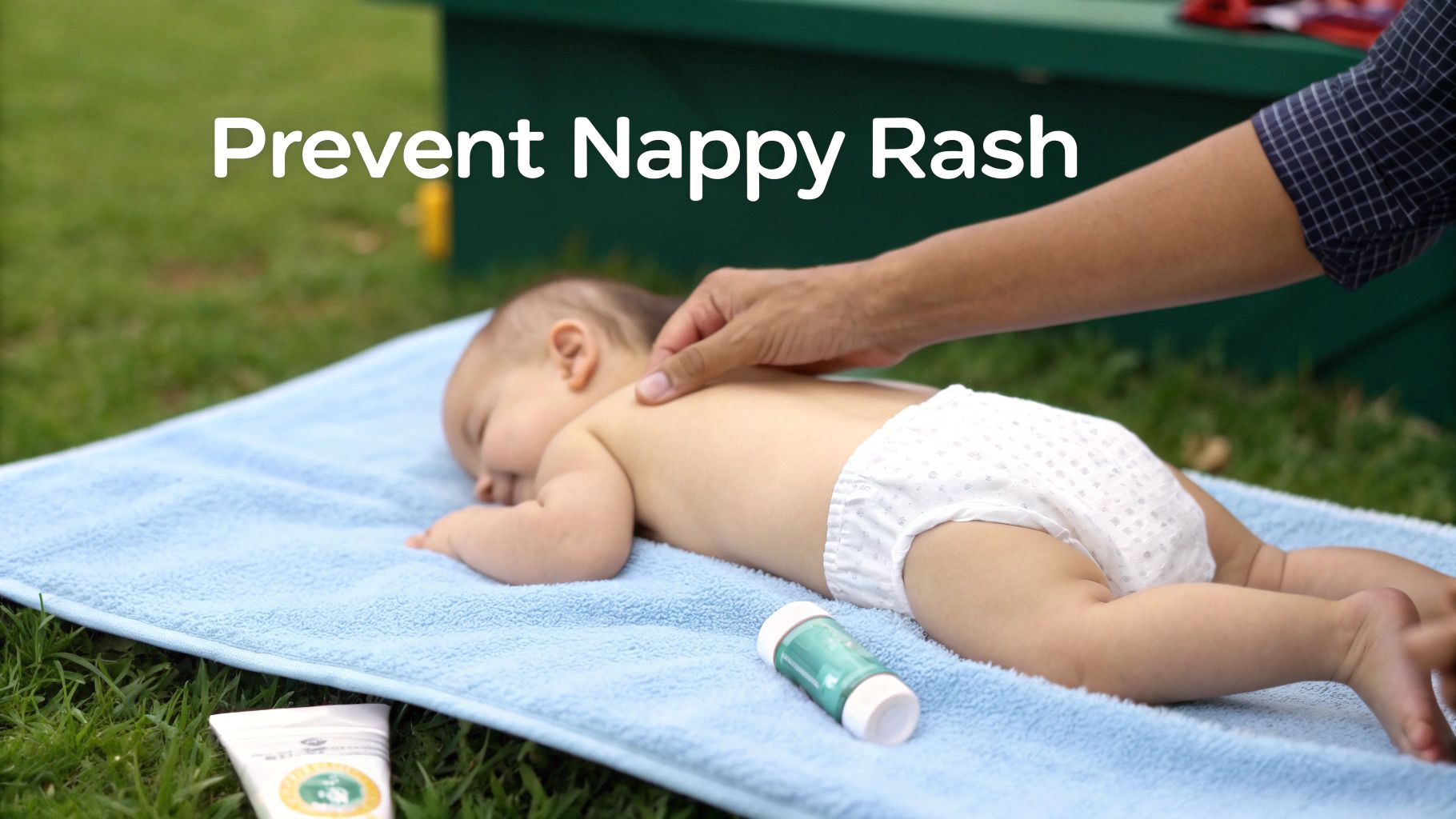
So what causes it? Most of the time, it's a combination of prolonged contact with moisture from wee and poo, plus a bit of friction from the nappy itself. This mix can weaken the skin’s natural protective barrier, leaving it open to irritation. Our whole strategy, then, is to keep that precious skin as clean, dry, and protected as we possibly can.
Gentle Prevention Strategies
When it comes to nappy rash, prevention is absolutely the best medicine. By weaving a few simple habits into your changing routine, you can make a huge difference. Think of it as creating a happy, healthy little microclimate for your baby’s bottom.
Here are the most effective ways to keep your newborn’s skin calm and comfortable:
- Change Nappies Frequently: This is the golden rule. For a newborn, you’ll want to change their nappy every two to three hours, and immediately after a poo. A wet nappy actually raises the skin's pH, which is a fast track to irritation.
- Clean Gently and Thoroughly: At each nappy change, clean your baby’s entire nappy area with plain water and soft cloths, or with gentle, fragrance-free baby wipes. The key is to then pat the skin completely dry with a clean, soft towel—never rub, as that just creates more friction.
- Embrace Nappy-Free Time: This is such a simple but powerful tool. Let your baby lie on a towel or waterproof mat without a nappy for just 10-15 minutes, a few times a day. This gives their skin a chance to properly breathe and dry out.
"Think of nappy-free time as a deep breath for your baby’s skin. It’s one of the easiest and most effective ways to prevent moisture buildup and keep irritation at bay."
Choosing Soothing and Protective Products
When your baby’s skin does need a little extra support, a good barrier cream is your best friend. The aim is to create a protective layer that acts as a shield between their skin and any moisture. But not all creams are created equal.
When picking a nappy cream, look for products with clean, simple ingredients. Soothing, natural formulas are always the best bet for a newborn’s sensitive skin.
Ingredients to Look For:
- Zinc Oxide: A brilliant mineral that creates a really effective barrier and has mild anti-inflammatory properties.
- Calendula and Chamomile: These botanicals are famous for their calming and soothing effects on unhappy skin.
- Shea Butter and Coconut Oil: Fantastic natural moisturisers that help to nourish and protect the skin barrier.
Just as important is knowing what to avoid. Steer clear of fragrances, parabens, and any harsh preservatives, as these can easily make irritation worse. At Hello Charlie, we meticulously check every single ingredient, so you can trust that our curated range of nappy rash creams contains only the gentlest, safest, and most effective formulas to care for your baby.
Your Newborn Nappy Questions, Answered
Stepping into the world of newborn nappies can feel like learning a new language. You've got questions, and we've got practical, tried-and-tested answers from our years of helping new parents. Let's clear things up so you can feel confident.
When Should I Move Up from Newborn Size Nappies?
While the weight guide on the nappy packet is a great starting point, the real test is the fit. Your baby will give you some tell-tale signs when it's time to size up.
Keep an eye out for frequent leaks (especially the dreaded overnight ones), angry red marks around their chunky thighs or waist, or if the nappy just isn't covering their bottom anymore. A classic test is to try and fit two fingers comfortably under the waistband; if it’s a struggle, it’s definitely time to go up a size. Don't feel you need to finish the whole pack if the fit is already causing problems!
Can I Use Cloth Nappies on a Newborn Straight Away?
You absolutely can! Many modern cloth nappies (MCNs) are now designed specifically for tiny newborns, giving them a lovely, snug fit right from day one.
It's best to look for dedicated 'newborn' size MCNs, as the 'one-size-fits-most' styles can be a bit bulky on a brand new baby. Starting with cloth from the get-go is a fantastic way to get into a good routine and start saving money (and the planet) immediately. Just be ready for lots of changes – we're talking 10-12 per day – so having a solid washing system in place is key.
What Is the Best Way to Dispose of Eco-Friendly Nappies?
This is a really important question. Even though many eco-disposables are made with biodegradable materials, they won't break down properly in a typical landfill environment. Unfortunately, most Australian councils don't have the commercial composting facilities needed to handle them.
The best practice is still to pop the soiled nappy into a compostable nappy bag before putting it in your regular rubbish bin.
Don't be discouraged, though! By choosing eco-nappies, you're still making a brilliant choice. You're significantly cutting down on petroleum-based plastics and nasty chemicals heading to landfill and supporting companies committed to using sustainable resources.
How Do I Handle a Poonami Blowout?
Ah, the poonami. It’s a rite of passage for every parent! First things first: take a deep breath and stay calm.
Lay your baby down on a change mat. Un-snap their onesie from the bottom and peel the soiled clothing down their body, away from their head and face. Use a few wipes to clean up the worst of the mess before you even touch the nappy tabs. Once the nappy is off and folded up, you can finish cleaning your baby properly. A great prevention tip is to always make sure the leg cuffs are fanned out (not tucked in) and the back of the nappy is pulled up nice and high. Sometimes, though, a blowout is just your baby's way of telling you it's time to size up!
And while you're looking after your little one, remember to look after yourself, too. The postpartum period comes with its own set of challenges. It can be helpful to find soothing relief for common discomforts by exploring things like postpartum sitz bath recipes for relief. Your well-being is just as important in these precious early weeks.
We hope this guide has helped demystify the world of newborn baby nappies and made you feel ready for anything. At Hello Charlie, we've done all the research for you, so you can shop with total peace of mind, knowing every single product is safe for your baby and kinder to our planet. Explore our curated range of eco-friendly nappies.


