





Discover the Best Eco Nappies Australia for Your Little One
When you start looking for the best eco nappies Australia has to offer, you’ll quickly notice that brilliant brands like Ecoriginals, Tooshies, and Luvme keep popping up. It's no accident. More and more parents are realising you don't have to compromise on performance to ditch the harsh chemicals. This move towards kinder, plant-based options is all about finding products that are gentle on our babies and the planet.
Why Australian Parents Are Switching to Eco Nappies
The shift to eco-friendly nappies in Australia isn't just about sending less rubbish to the tip. It's a thoughtful choice, driven by parents wanting healthier and more sustainable products for their families. We're all becoming more aware of what’s hiding in conventional nappies and are actively looking for alternatives that won't irritate our baby’s delicate skin.
This growing consciousness is making waves in the baby care industry. The Australian nappy market is already worth around AUD 1.81 billion in 2024, and it's set to grow by almost 6% each year for the next decade. A huge part of that growth is coming from the demand for better, more sustainable options.
Putting Health and Comfort First
At the end of the day, it all comes down to one thing: protecting your baby's sensitive skin. Traditional nappies can be loaded with a cocktail of chemicals that you'd rather not have anywhere near your little one.
Here’s what many parents are concerned about:
- Chlorine Bleaching: This process can leave behind dioxins, which are notorious for causing irritation.
- Fragrances and Lotions: They might smell nice, but they often contain phthalates and other synthetic chemicals that can lead to rashes and reactions.
- Harsh Chemicals: The glues and dyes in many standard nappies are another common culprit for skin irritation.
Eco nappies, on the other hand, are usually crafted from plant-based materials like bamboo or wood pulp. These materials are naturally softer, more breathable, and hypoallergenic. For a baby prone to nappy rash, making this one simple change can be a game-changer.
The image below really captures why so many families are making the 'Eco Nappy Switch' for a healthier start.
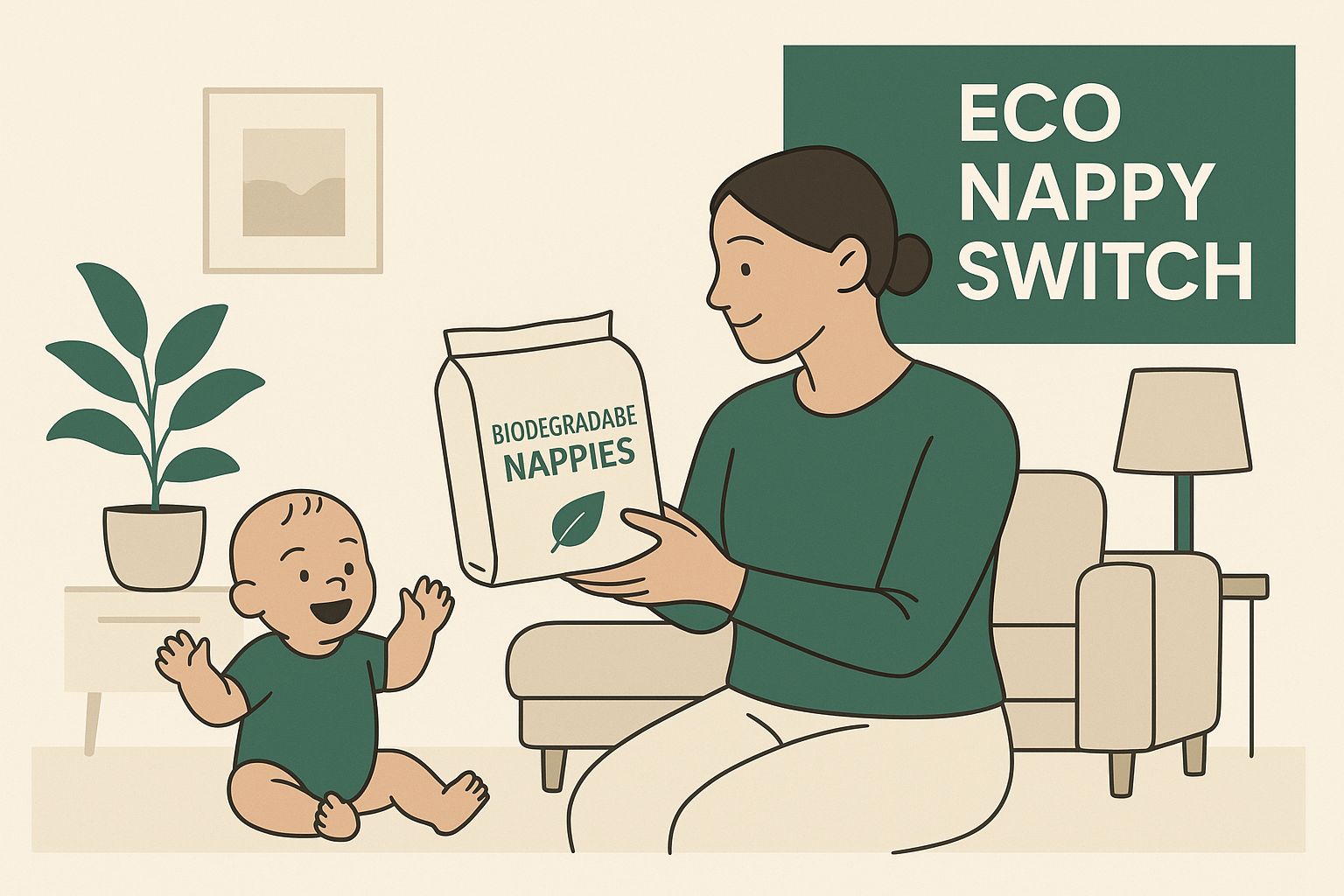
It perfectly illustrates that core motivation: choosing pure, natural products for the newest and most precious member of the family.
The decision to switch often comes down to this: parents want peace of mind. Knowing that the product touching their baby’s skin 24/7 is free from unnecessary chemicals provides a sense of security that is priceless.
This isn't just happening in homes, either. The same thinking is taking root in larger childcare settings. Early learning centres are also embracing sustainability, seeing the dual benefits for the children in their care and the environment. We delve deeper into this trend in our guide on sustainability in early childhood learning centres. It's a collective movement that shows a powerful commitment to building a healthier future for our kids.
Understanding Eco Nappy Materials and Labels
When you're trying to find the best eco nappies Australia has to offer, the packaging can feel like a maze of buzzwords. You'll see terms like "plant-based," "chlorine-free," and a whole host of different logos. It can be pretty overwhelming.
So, what actually makes a nappy eco-friendly and safe for your little one? Let's get past the marketing fluff and look at the materials and labels that truly matter.
What Are Eco Nappies Made Of?
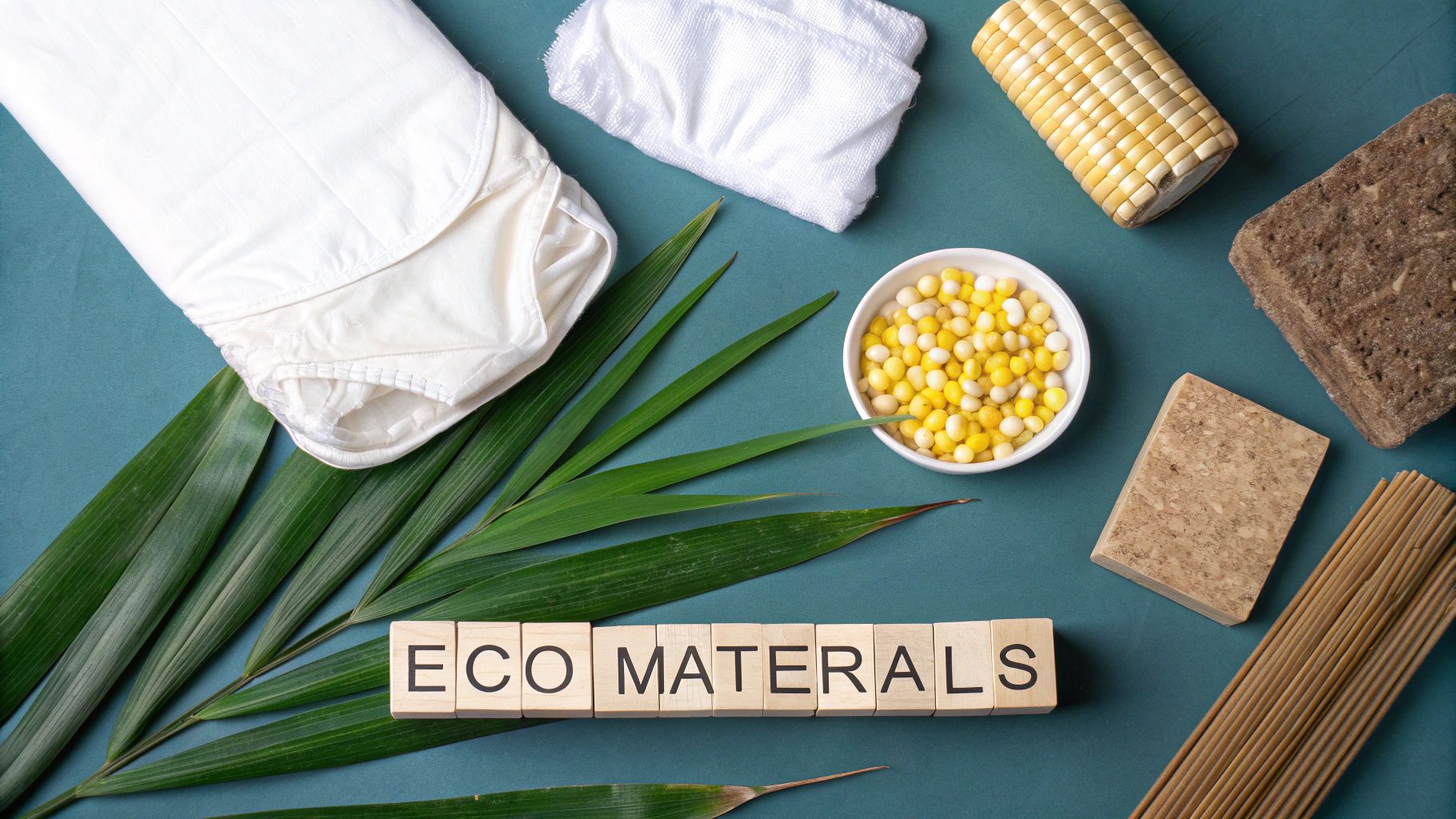
The real difference in an eco nappy is found in its core. Instead of relying on petroleum-based plastics, the best brands use innovative, renewable materials to handle all the heavy lifting (and wetting!).
- Sustainably Sourced Wood Pulp: This is the main absorbent material, often called "fluff." Brands that are serious about sustainability use pulp from forests certified by the Forest Stewardship Council (FSC). This is your guarantee that it's been harvested responsibly.
- Bamboo: A really popular choice because it’s so soft and grows like a weed. Bamboo shoots up with minimal water and no pesticides, making it an incredibly renewable resource for the soft top and back sheets of a nappy.
- Corn Starch: This clever ingredient is often used to create a biodegradable, plastic-free waterproof layer (known as PLA film). It works just as well as traditional plastic but breaks down far more easily, which means less nappy waste sitting in landfill for hundreds of years.
These plant-derived materials are a world away from the chemical-heavy composition of many conventional nappies. By choosing them, you're not just avoiding potential skin irritants for your baby, you're also supporting farming practices that are much kinder to our planet. For a deeper dive, our guide to cloth, hybrid, and disposable nappies breaks it all down.
But honestly, the most significant difference is what’s left out. The best eco nappies are made without chlorine, fragrances, lotions, or phthalates—all common culprits behind nappy rash and skin sensitivities.
To help you quickly compare the materials you'll see on the shelf, here's a simple breakdown.
Eco Nappy Material Comparison
| Material | Key Benefit | Things to Consider | Common Certifications |
|---|---|---|---|
| Wood Pulp | Excellent absorbency, biodegradable | Must be from a sustainable source | FSC |
| Bamboo | Super soft, hypoallergenic, highly renewable | Can be more expensive than other materials | OEKO-TEX, FSC |
| Corn Starch (PLA) | Plastic-free waterproof barrier, compostable | Only compostable in specific conditions | TUV Austria (OK compost HOME) |
| Cotton | Soft, breathable, natural | Requires significant water to grow | OEKO-TEX, GOTS |
Looking at a table like this makes it much easier to weigh up the pros and cons based on what's most important to you, whether that's softness, sustainability, or compostability.
How to Decode Certifications and Labels
Think of logos and labels as your shortcut to trust. They provide independent, third-party verification that a brand is actually doing what it claims to be doing. It’s worth taking a moment to learn about the importance of certifications like Oeko-Tex Standard 100 to understand why they matter so much.
Here are a few of the key ones to look for on nappy packaging in Australia:
- FSC (Forest Stewardship Council): This seal confirms the wood pulp in the nappy comes from responsibly managed forests.
- OEKO-TEX Standard 100: This is a big one. It guarantees that every single part of the nappy has been tested for harmful substances and is completely safe for your baby.
- Cruelty-Free (like the Leaping Bunny or PETA logos): A simple certification that ensures the product and its ingredients were not tested on animals.
- TUV Austria (OK compost HOME): This is for nappies that claim to be compostable. It verifies that the product can be safely composted in a home setup, not just an industrial facility.
Once you know what these symbols mean, you can see past the clever marketing and confidently choose a nappy that is genuinely better for both your baby’s skin and the environment.
How to Judge Real-World Nappy Performance
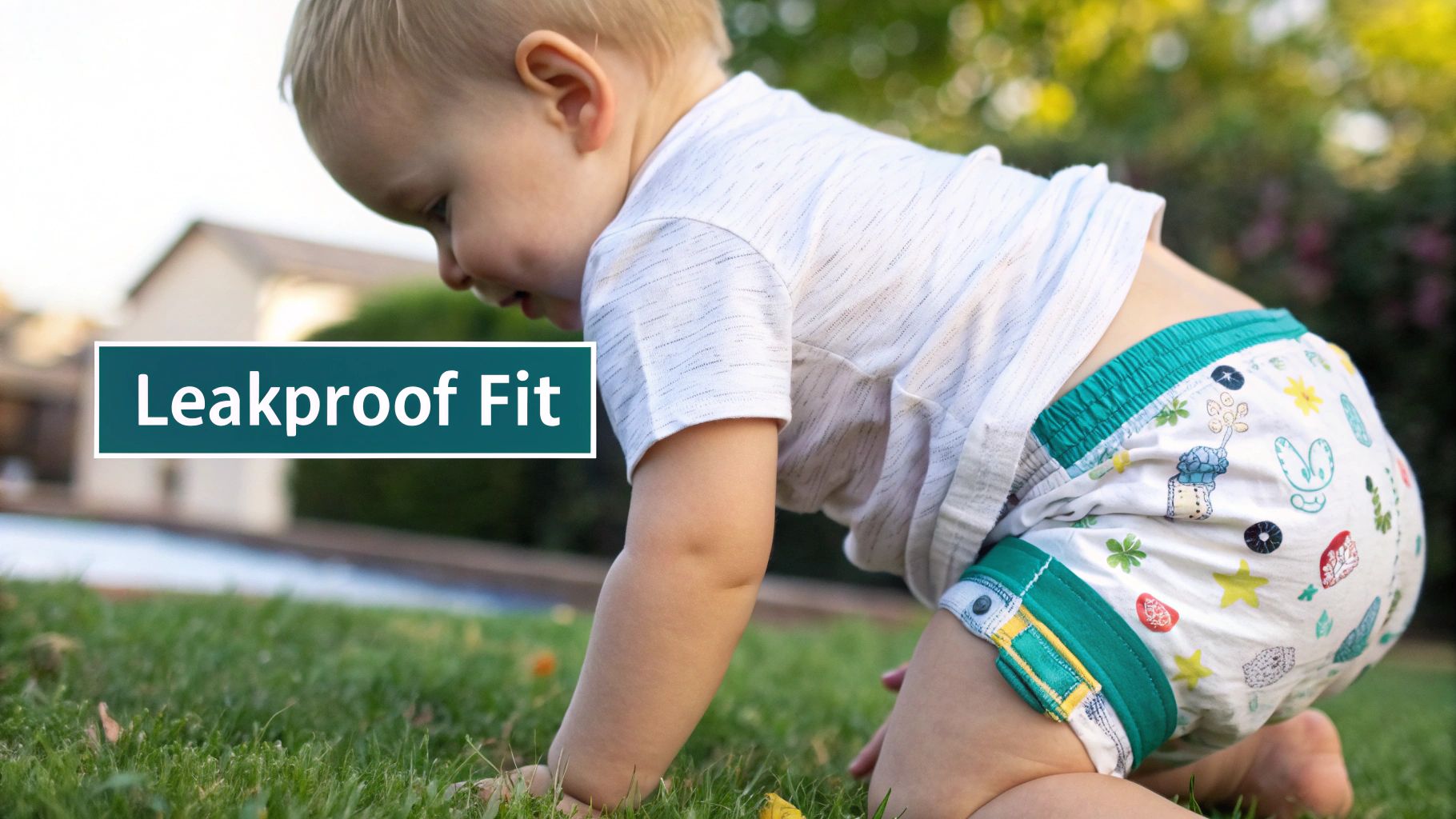
Let's be honest, an eco nappy’s green credentials don't mean much if it can't handle a real-world baby situation. Performance is everything. You need a nappy that prevents leaks, feels soft against delicate skin, and stays put on your wriggly little one.
Judging performance is about more than just reading the packet. It’s about knowing what to look for when you have the nappy in your hands and, most importantly, on your baby.
The Anatomy of a High-Performing Nappy
When you're trying out a new brand, think of it like a test drive. You need to pay attention to the little details that make a massive difference in preventing leaks and keeping your baby happy and dry.
A well-designed nappy has several key features working in harmony.
- Deep Leg Cuffs: Look for generous, soft elasticated cuffs around the leg openings. These are your first line of defence against side leaks, especially once your baby starts moving around more.
- Stretchy, Secure Waistband: A good waistband should be soft and flexible, giving a snug fit without digging into your baby’s tummy. This is what stops those dreaded "up the back" blowouts, which are all too common with newborns.
- Strong Grip Tabs: The tabs need to be easy to reposition but strong enough to hold securely. This is a must when your toddler decides to do some impromptu gymnastics during a nappy change!
These elements are the foundation of a reliable nappy. If any of them feel flimsy or poorly constructed, you’re probably heading for some frustrating laundry days.
Finding the Perfect Fit
Even the most absorbent, brilliantly designed nappy will fail if the fit is wrong. An incorrect size is the number one cause of leaks, whether it's too big and gappy or too small and restrictive.
Getting the fit right is key. You can find a comprehensive guide to baby diaper sizes here, which is a great resource for preventing leaks and discomfort.
When checking the fit on your baby, you should be able to run two fingers comfortably around the waistband and leg cuffs without leaving a big gap. If you’re seeing red marks on your baby’s skin at change time, that’s a telltale sign the nappy is too tight.
A common mistake is moving up a size too soon. If your baby is within the weight range for their current size but you're getting leaks, double-check the fit first. Make sure the leg cuffs are properly fanned out before you assume you need a bigger nappy.
Real-World Scenarios and What to Look For
The true test of any nappy is how it holds up during the most challenging situations. A great daytime nappy might not have what it takes to last the whole night.
Here are a few scenarios to consider when evaluating the best eco nappies Australia has to offer your family:
- The Overnight Test: Does the nappy feel heavy but not completely saturated in the morning? Is your baby’s skin dry to the touch? A top-tier overnight nappy needs a super absorbent core that can wick moisture away and lock it in for up to 12 hours.
- The Long Car Ride: After your little one has been sitting in their car seat for a while, are there any signs of compression leaks? This really tests the nappy's ability to hold liquid under pressure.
- The Active Toddler: As your toddler runs, climbs, and tumbles, does the nappy stay in place? The fit and flexibility are crucial here to prevent sagging and gapping.
By putting nappies through these practical, real-life tests, you can see past the marketing claims. You’ll quickly find out which brands deliver the reliable, leak-proof performance your family needs, giving you peace of mind that you’ve made the right choice.
The True Environmental Footprint of Nappies
https://www.youtube.com/embed/8bYsrYZEIW8
Let's have an honest chat about the environmental impact of nappies. It’s a conversation every parent needs to have when trying to make a sustainable choice. The real story isn't just about what happens when you toss a nappy in the bin; it’s about its entire lifecycle, from the raw materials it’s made from to where it ends up. Every single disposable nappy, eco or not, leaves a footprint.
The hard truth is that conventional disposable nappies are a massive problem for the planet. They're one of the biggest contributors to landfill, mostly because their petroleum-based plastics can hang around for hundreds of years. When you consider that Australians throw out millions of nappies every single year, the sheer scale of the waste is hard to ignore. This fact alone is what drives so many parents to find a better way. You can dig into the numbers and the growing shift towards sustainable options in recent market insights.
This is exactly where choosing one of the best eco nappies Australia has to offer can make a real, tangible difference. When you pick nappies made from plant-based materials like sustainably sourced wood pulp or corn starch, you’re backing a much kinder and gentler production cycle.
Breaking Down the Benefits of Biodegradable Nappies
The word "biodegradable" gets thrown around a lot, but it's crucial to understand what it actually means for nappies. The reality is that no disposable nappy is 100% biodegradable – those sticky grip tabs and stretchy elastics are still a tricky hurdle. But the best eco nappies are made from a much higher percentage of plant-based materials, and that's a huge win.
Here’s why it matters so much:
- Less Plastic: By using renewable resources, these nappies cut down our reliance on the fossil fuels needed to make traditional plastics.
- A Lighter Footprint: Their manufacturing process is often less energy-intensive, which means fewer greenhouse gas emissions are produced.
- Fewer Nasties: Eco nappies are typically made without chlorine bleaching, so no harmful dioxins are released into the environment during production.
All of this means that before a nappy even touches your baby's skin, it's already had a much lighter impact on our planet.
The goal here isn't about finding a perfect, zero-waste solution. It's about making a significant improvement. Choosing a mostly biodegradable nappy over a conventional plastic one is a powerful step in reducing your family's long-term environmental footprint.
The Landfill Question
A common and completely valid question I hear is, "Do biodegradable nappies actually break down in landfill?" It's a great point. Landfill conditions are terrible for decomposition because there's hardly any oxygen or light. This means even a highly biodegradable nappy will break down much, much slower than it would in a composting environment.
So, what's the point? The benefit is still absolutely there. When these nappies do eventually break down, they won't leave behind the toxic microplastics that conventional nappies do. This is a critical difference for the long-term health of our soil and waterways.
It’s a complex topic, and if you want to dive deeper, we've covered it in our article exploring whether eco nappies are really biodegradable. Ultimately, it’s about making a "less bad" choice that, when made by thousands of families, adds up to a much healthier planet.
Managing the Cost of Eco Nappies in Australia
Let’s be honest, the budget is a huge deal for every family. When you’re staring at a wall of nappies, it’s easy to see why the initial sticker price of eco-friendly options can make you pause. There’s no getting around it—some of the best eco nappies Australia has on offer can look a bit pricier on the shelf than the standard supermarket brands.
But the shelf price doesn't really tell the whole story.
When you drill down to the actual cost per nappy, that daunting gap often shrinks. A premium conventional nappy might sit around 50 cents, while a top-tier eco nappy could be closer to 70 cents. For a newborn going through ten nappies a day, you’re looking at a difference of about $2. It’s a cost many parents decide is a worthwhile trade-off for nappies made from sustainable materials and free from harsh chemicals.
The trick is to find clever ways to manage that extra expense, making it a sustainable choice for your family's budget, not just the planet.
Smart Shopping Strategies for Eco Nappies
Making the switch to eco nappies more affordable often just comes down to a few tweaks in your shopping routine. A little bit of planning can lead to some pretty significant savings over time, making the whole thing feel much less of a financial stretch.
Buying a single, small pack from the supermarket is almost always the most expensive way to do it. The single biggest way to save money is to buy in bulk. Look for monthly boxes or multi-packs online—you’ll be amazed at how much this can lower the per-nappy cost.
Here are a few other powerful tactics we’ve seen work wonders for families:
- Embrace Subscriptions: Many online stores, including us here at Hello Charlie, offer subscription services. Not only do you get the convenience of nappies showing up at your door right when you need them, but you’ll often get a discount of 5-15% off every order.
- Watch for Sales: Keep an eye out for seasonal sales and special promotions. If you have the storage space, stocking up during a sale can save you a bundle.
- Join Loyalty Programs: It’s worth signing up for a store’s rewards program. You can earn points on every purchase, which you can then cash in for discounts on future orders.
By combining these strategies—say, timing your subscription order to coincide with a big sale—you can often get the price of premium eco nappies surprisingly close to the standard supermarket brands. It’s all about planning ahead instead of making last-minute-dash purchases.
Sample Cost Per Nappy Breakdown
To give you a clearer picture, it helps to see the numbers side by side. Keep in mind that prices can vary, but this table gives you a good ballpark idea of what to expect in the Australian market.
| Nappy Type | Average Price Per Nappy (AUD) | Where to Buy |
|---|---|---|
| Standard Conventional | $0.40 - $0.60 | Supermarkets, Chemists |
| Premium Eco Nappy | $0.65 - $0.85 | Online Eco Stores, Health Shops |
| Bulk Buy Eco Nappy | $0.55 - $0.70 | Online Retailers, Subscriptions |
At the end of the day, choosing eco nappies is a personal decision that balances your budget, your values, and what works best for your baby. By becoming a savvy shopper, you can absolutely make a choice that’s kinder to your baby and the planet without breaking the bank.
Got Questions About Eco Nappies? We’ve Got Answers.
When you start looking into eco nappies, it’s easy to get bogged down in the details. Once you’ve waded through the marketing claims, you’re often left with some very practical, real-world questions. What if they leak overnight? Are they really better for the planet if they just end up in the bin?
We hear these questions all the time from Aussie parents. So, let’s clear things up and give you the straightforward answers you need. This will help you feel completely confident in your final decision.
Are Biodegradable Nappies Actually Better if They Go to Landfill?
This is a brilliant question, and one we get asked a lot. It’s true that a typical landfill is a terrible environment for anything to break down. Buried under tonnes of rubbish without light or oxygen, the process is incredibly slow.
But here’s the thing: even if they end up in your council bin, plant-based nappies are still a massive step up. Their production starts with renewable resources like bamboo or FSC-certified wood pulp, which means we’re not relying on petroleum to make them. The manufacturing process itself is often cleaner, too, with a much lower carbon footprint.
And perhaps most importantly, when they eventually do degrade, they won't be shedding toxic microplastics into the environment for hundreds of years like conventional nappies do. It's not a perfect end-of-life solution, but it's a huge improvement.
Are Eco Nappies a Good Choice for Sensitive Skin?
For so many babies, the answer is a definite yes. High-quality eco nappies are made with delicate skin in mind.
What makes them so much gentler?
- No Nasties: They’re made without the harsh stuff. Think no fragrances, lotions, chlorine, or phthalates—all of which are common triggers for nappy rash.
- Breathable by Nature: Plant-based materials like bamboo are naturally more breathable than plastic. This better airflow helps keep your baby’s skin dry and reduces the chance of irritation.
- Naturally Hypoallergenic: Many of the materials used are naturally hypoallergenic, making them a fantastic choice for bubs who are prone to eczema or other skin sensitivities.
Of course, it’s always smart to check the specific materials list for any brand you’re considering, but on the whole, eco nappies are one of the best choices you can make for a baby with sensitive skin.
Can I Really Trust an Eco Nappy Overnight?
Absolutely. It’s a common worry – will it hold up for a full 12 hours without leaks? I get it. But today's eco nappies are designed for serious performance. Many of the best eco nappies Australia has on offer are built with incredibly absorbent cores that can easily handle a long night.
Look for brands that specifically mention “12-hour protection” or are designed with deep, double-leg cuffs for that extra bit of leak-proof security. Just like with any nappy, you might need to try a couple of brands to find the perfect fit and absorbency for your baby’s shape and sleep habits.
You'll see the words "biodegradable" and "compostable" thrown around. The key difference is certification. Biodegradable just means it can be broken down by microorganisms. Compostable means it meets strict standards (like TUV Austria's 'OK compost HOME') to break down into nutrient-rich soil in a specific timeframe.
If you’re planning to compost, always look for that official certification logo. It’s your guarantee that the nappy will do what it says it will.
At Hello Charlie, we’ve already done the hard work for you. We stock only the top-performing, most trusted eco nappies that we know are gentle on your baby and the planet. Explore our curated collection and find the perfect fit for your family today at https://www.hellocharlie.com.au.
Article created using Outrank


