
Plant-based baby products: safe, sustainable choices
, by Hello Charlie, 11 min reading time
Discover what 'plant-based' really means for Aussie baby products, which certifications matter, and how to choose safe, sustainable options for your family.
, by Hello Charlie, 11 min reading time
The label says ‘plant-based’ and suddenly the product feels safer, greener, and better for your baby. But here’s the thing: in Australia, the term ‘plant-based’ carries no legal definition, no regulatory weight, and no guaranteed standard. Any brand can print it on packaging without meeting a single independent requirement. That gap between marketing and reality catches many well-meaning parents off guard. This article unpacks what plant-based actually means for baby products in Australia, which categories to prioritise, how to read certifications that genuinely matter, and how to cut through the noise so you can shop with real confidence.
| Point | Details |
|---|---|
| ‘Plant-based’ is not always vegan | Australian products labelled ‘plant-based’ may contain trace animal ingredients unless fully vegan certified. |
| Check for independent certification | Look for marks like ACO, Vegan Australia, or FSC to ensure genuine plant-based quality and sustainability. |
| Performance is proven | Lab-tested plant-based nappies and wipes can match or exceed mainstream options for safety and effectiveness. |
| Read ingredient lists carefully | Marketing can be misleading; always check the actual ingredients and source for plant-based baby products. |
If you’ve picked up a pack of nappies or a bottle of baby wash and felt reassured by the words ‘plant-based’ on the front, you’re not alone. The problem is that this phrase is essentially a marketing tool in Australia, not a regulated claim. There’s no government body or official standard that defines what percentage of plant-derived ingredients a product must contain before it earns that label.
This matters because ‘plant-based’ is unregulated and may still contain trace animal or synthetic additives, unlike strict vegan labels. A nappy marketed as plant-based might use bamboo fibre for its outer layer but still rely on synthetic polymers in its absorbent core. A baby wipe could contain a handful of botanical extracts alongside preservatives you’d rather avoid.
It’s also worth understanding the difference between ‘plant-based’, ‘vegan’, and ‘organic’, because parents often use these terms interchangeably when they mean quite different things.
| Term | What it means | Regulated in Australia? |
|---|---|---|
| Plant-based | Partially or mainly derived from plant sources | No |
| Vegan | Free from all animal ingredients and by-products | Partially (via Vegan Australia label) |
| Organic | Grown/produced without synthetic chemicals | Yes (via ACO certification) |
| Natural | Vague; no clear standard | No |
Core plant-derived materials you’ll commonly see in baby products include bamboo fibre, rice starch, pea protein, plant-based oils (coconut, sunflower, jojoba), and water-based wipe solutions. These can be excellent choices. But without third-party verification, it’s difficult to know how much of a product is genuinely plant-derived versus synthetically supplemented.
This is where certifications do the heavy lifting. Look for ACO (Australian Certified Organic), Vegan Australia, FSC (Forest Stewardship Council for paper and packaging), and Made Safe as reliable markers. These programmes require brands to meet independently audited criteria, giving you something meaningful to rely on beyond front-of-pack claims.
“The word ‘plant-based’ sounds clean and safe, but without a certification backing it up, it tells you very little about what’s actually in the product.”
When you’re browsing options, checking toxin free baby products and recyclable baby products guidance can help you set a higher benchmark for what you bring into your home.
Once you know what ‘plant-based’ really means, the next question is: what categories of products are actually available, and which brands are worth your attention?
Nappies are probably the biggest category. Australian market leaders include Sprout Organic, Comfy Koalas, and Ecoriginals nappies, as well as Joonya and Comfy Koalas wipes. Ecoriginals, for instance, use plant-based top sheets and chlorine-free materials, and have received strong CHOICE ratings. Comfy Koalas earned Clean+Conscious awards for their combination of plant-based materials and performance.
Wipes are another area where plant-based ingredients shine. Joonya wipes use plant-derived cleansing agents and natural aloe vera, avoiding alcohol and parabens. Comfy Koalas wipes use a water-based solution with plant extracts.
Infant formula is a more complex category. Sprout Organic offers goat and cow milk-based formulas using organic, minimally processed ingredients. While not fully plant-based, their commitment to clean sourcing reflects the broader movement.
Skincare for babies is flooded with plant-based claims. Brands using certified organic plant oils (like WotNot, which carries both ACO certification and Vegan Australia accreditation) give parents a more reliable option than generic ‘natural’ labelling.
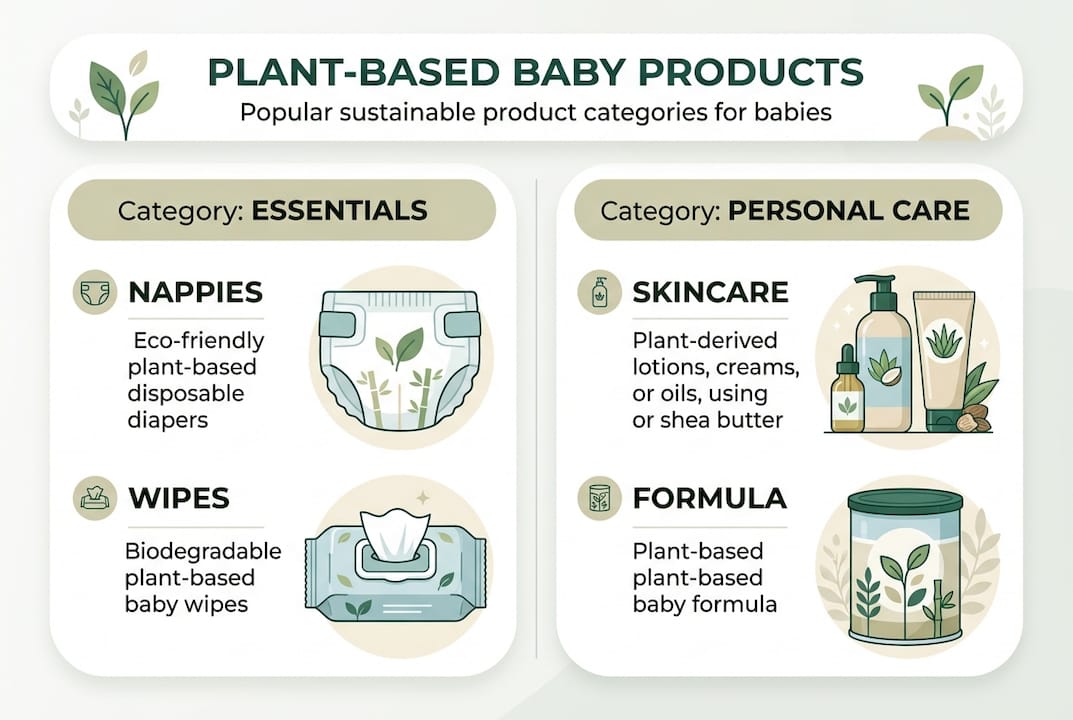
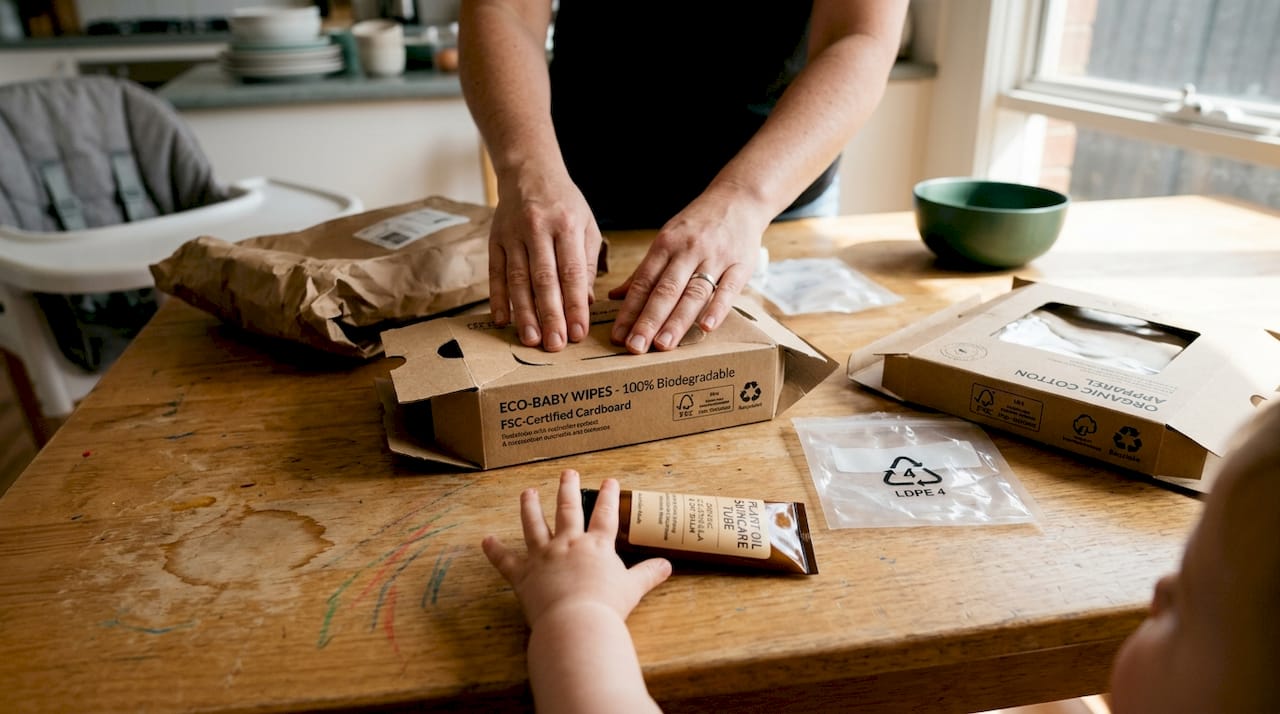
Packaging is often overlooked. FSC-certified cardboard and minimal plastic packaging are genuine markers of sustainability commitment.
Here’s a quick reference guide:
| Category | Leading Australian brands | Key certifications |
|---|---|---|
| Nappies | Ecoriginals, Comfy Koalas | Made Safe, Dermatest |
| Wipes | Joonya, Comfy Koalas | Clean+Conscious, Dermatest |
| Skincare | WotNot, Gaia | ACO, Vegan Australia |
| Formula | Sprout Organic | ACO |
| Packaging | Various | FSC |
For a broader look at what to stock up on, our guide to sustainable baby essentials and the baby and kids advice section offer category-by-category breakdowns worth bookmarking.
Plant-based baby products have real, documented advantages. But they’re not without trade-offs, and it pays to go in with clear eyes.
Key benefits:
Limitations to know:
Pro Tip: Independent certification is your best protection against greenwashing. If a product claims to be plant-based but carries no third-party verification, treat it with the same scepticism you’d apply to any unsubstantiated health claim.
For more practical guidance on everyday choices, our eco baby tips and advice on reducing baby waste are worth a read.
Navigating plant-based baby products doesn’t need to be overwhelming. A few clear steps make the process much more manageable.
Steps for evaluating products:
Common greenwashing tactics to watch for:
Australian eco-parents should check for certified vegan/organic and sustainability labels like ACO, Vegan Australia, FSC, and carbon neutral to avoid misleading claims.
Pro Tip: Bookmark the Clean+Conscious and CHOICE websites for unbiased, tested reviews of Australian baby products before you buy. Their databases are updated regularly and cover the most popular brands in detail.
Our baby checklist for sustainability is a helpful companion when you’re building out your product kit from scratch.
Here’s an uncomfortable truth: the ‘plant-based’ boom in baby products is, in part, a marketing phenomenon. That’s not cynicism, it’s pattern recognition. When a term becomes popular with eco-conscious shoppers, brands rush to claim it, often without changing what’s actually inside the product.
This doesn’t mean plant-based baby products are a scam. Far from it. Some genuinely excellent products exist in this space. But the label itself is not the proof. Performance data and independent certification are.
The parents who navigate this category best are those who stop letting packaging design drive their decisions. They check expert parenting tips, read the ingredients panel, look for the ACO or Vegan Australia tick, and cross-reference with CHOICE or Clean+Conscious before buying. They treat ‘plant-based’ as a starting point for investigation, not a conclusion. That sceptical, evidence-first mindset protects your child and your wallet.
If you’re ready to shop with confidence, Hello Charlie has done the curation work for you.
Our range focuses on genuinely certified, independently tested baby products from brands that stand up to scrutiny. Whether you’re after everyday wipes like WotNot baby wipes, practical solutions like WotNot biodegradable nappy bags, or a broader browse across nappies, skincare, and feeding essentials, you’ll find products backed by real certifications, not just clever packaging. Visit the Hello Charlie eco range for Australia-wide delivery on a curated selection of plant-based, vegan, and organic baby essentials your family can genuinely trust.
No, ‘plant-based’ may include trace animal additives unlike strict vegan labels. Some plant-based products still contain ingredients like lanolin or animal-derived vitamin D3.
Plant-based nappies are not always fully biodegradable or home compostable, so check the packaging carefully for specific composting certifications before assuming they’ll break down in your council bin.
Top plant-based brands perform as well as or better than conventional alternatives according to CHOICE and Clean+Conscious, with Ecoriginals and Comfy Koalas consistently scoring well on absorbency and skin safety.
Check for certified vegan/organic sustainability labels such as ACO, Vegan Australia, and FSC, and cross-reference with trusted reviewers like CHOICE or Clean+Conscious before purchasing.