

Natural teething toys: safe, eco-friendly choices for babies
, by Hello Charlie, 11 min reading time
Discover how natural teething toys made from rubber, wood, and organic cotton offer safer, eco-friendly options for Australian babies. A practical guide for eco-conscious parents.
, by Hello Charlie, 11 min reading time
Not every teething toy on the market is as safe as it looks. Many conventional options contain plastics, synthetic coatings, or chemical additives that babies are then chewing on for months at a stretch. For eco-conscious Australian parents, this is a real concern, not just a niche worry. Natural teething toys offer a genuinely safer and more sustainable path, made from materials like natural rubber, untreated wood, and organic cotton that are kinder to your baby and the planet. This guide covers what natural teething toys actually are, why they matter, how to choose the right one, and what to look for when navigating a crowded market full of greenwashing.
| Point | Details |
|---|---|
| Natural toys use safe materials | Natural teething toys are made from rubber, wood, and organic cotton, reducing chemical risk. |
| Eco-friendly for families | Choosing natural toys helps minimise landfill and encourages sustainable parenting in Australia. |
| Check for certifications | Australian parents can look for EN71 and non-toxic standards to ensure toy safety. |
| Read labels and reviews | Carefully inspect ingredients, manufacturer background, and user reviews before buying a teething toy. |
The term “natural teething toy” gets thrown around a lot, but it has a specific meaning worth unpacking. A genuinely natural teething toy is made from materials that come from nature with minimal processing and no synthetic additives. That means no PVC, no BPA, no phthalates, and no mystery coatings. It also means the manufacturing process itself should be transparent and responsible.
The most common materials in legitimate natural teething toys include:
One thing that catches Australian parents off guard is the gap between “natural-looking” and actually natural. A toy made from beige-coloured plastic moulded to look like wood is not a natural teething toy. Genuine options will list their materials clearly, often with certifications to back it up.
Teething typically begins around 4 to 7 months of age, which means babies are putting these toys in their mouths constantly during a critical window of development. The stakes for safe materials are high. As noted in ethical toy manufacturing research, teething toys made from natural rubber or wood can significantly reduce exposure to plastics and chemicals.
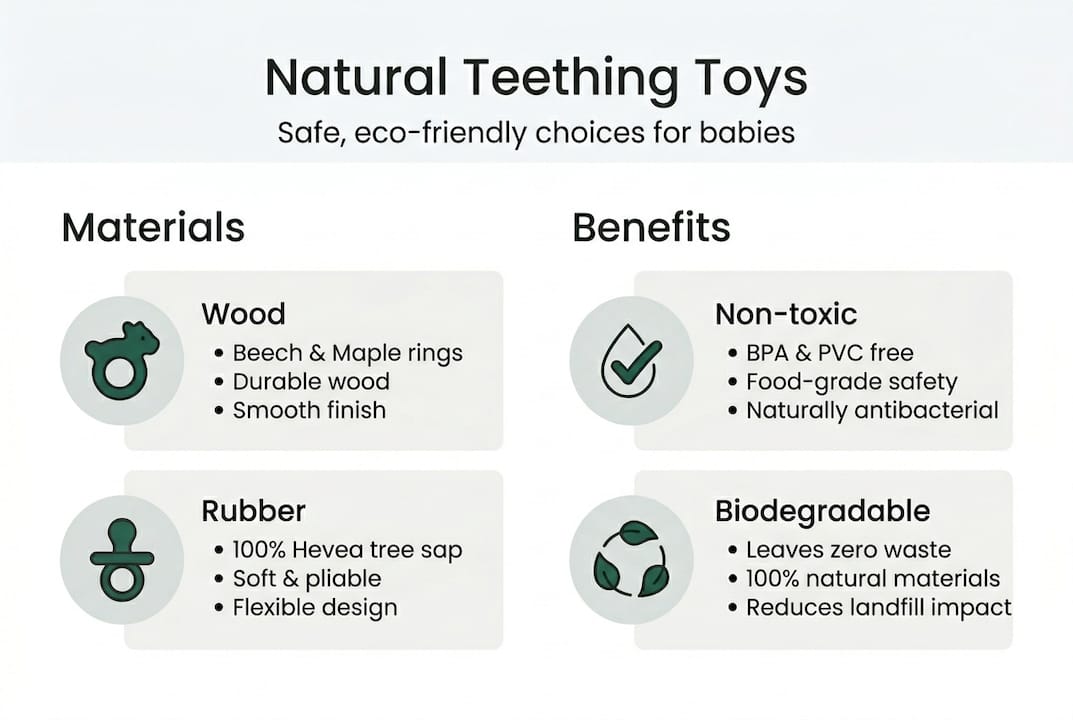
For Australian families, choosing natural also carries an environmental benefit. Rubber and wood are renewable resources. Organic cotton is biodegradable. Compare that to plastic teethers that sit in landfill for hundreds of years after a baby outgrows them. You can explore more about the benefits of wooden baby toys and how they support sensory play in your little one’s early months.
The case for natural teething toys goes beyond personal preference. It touches on real health outcomes, environmental responsibility, and the kind of world you want your child to grow up in.
Health and safety first. Conventional plastic and silicone teething toys can contain a range of concerning chemicals. PVC plastics often include phthalates to make them soft and flexible. Some painted toys carry traces of heavy metals. Because babies mouth toys constantly, choosing non-toxic options is essential for reducing chemical exposure during one of the most vulnerable stages of development.
Here is a quick comparison to help frame the differences:
| Feature | Natural teething toys | Conventional plastic toys |
|---|---|---|
| Material origin | Renewable, plant-based | Petrochemical-based |
| Chemical risk | Very low | Potentially higher |
| Biodegradability | Yes (most materials) | No |
| Durability | High with care | Variable |
| Certifications | EN71, GOTS, FSC | EN71 (sometimes) |
Environmental impact matters too. Natural materials break down. A beech wood teether, once it has served its purpose, does not persist in a landfill for centuries. Rubber from sustainable plantations and GOTS-certified organic cotton come from supply chains with a lower environmental footprint. Every purchase is a small vote for the kind of industry you want to support.
Social responsibility is part of the picture. Ethical manufacturers of natural teething toys tend to pay fair wages, maintain safer factories, and operate with more transparency. You can check out safer play tips for a deeper look at what ethical manufacturing actually involves.
Pro Tip: When reading product labels, look for the words “food-grade,” “GOTS certified,” “FSC certified,” or “EN71 compliant.” If a toy simply says “natural” with no supporting detail, that is a flag worth noting.
“Choosing a teething toy is one of the first real material decisions you make for your baby. It pays to make it count.”
Australian toy safety guidelines from Choice recommend parents check materials and certifications carefully, especially for products used in mouthing play.
To help you apply these principles, here is a practical look at what types and materials are actually available to Australian parents today.
Australian parents can choose from a wide range of natural teething toys, including those made from wood, natural rubber, and organic textiles, with each material offering a distinct sensory experience for your baby.
Natural rubber teethers are among the most popular choices. They are soft enough to soothe swollen gums without causing damage, flexible for tiny hands to grip, and resilient enough to handle enthusiastic chewing. Look for one-piece rubber teethers with no hollow cavities, as hollow toys can trap moisture and breed mould. A great example is the Tikiri My First Zoo natural rubber teether, which combines sensory stimulation with safe materials.
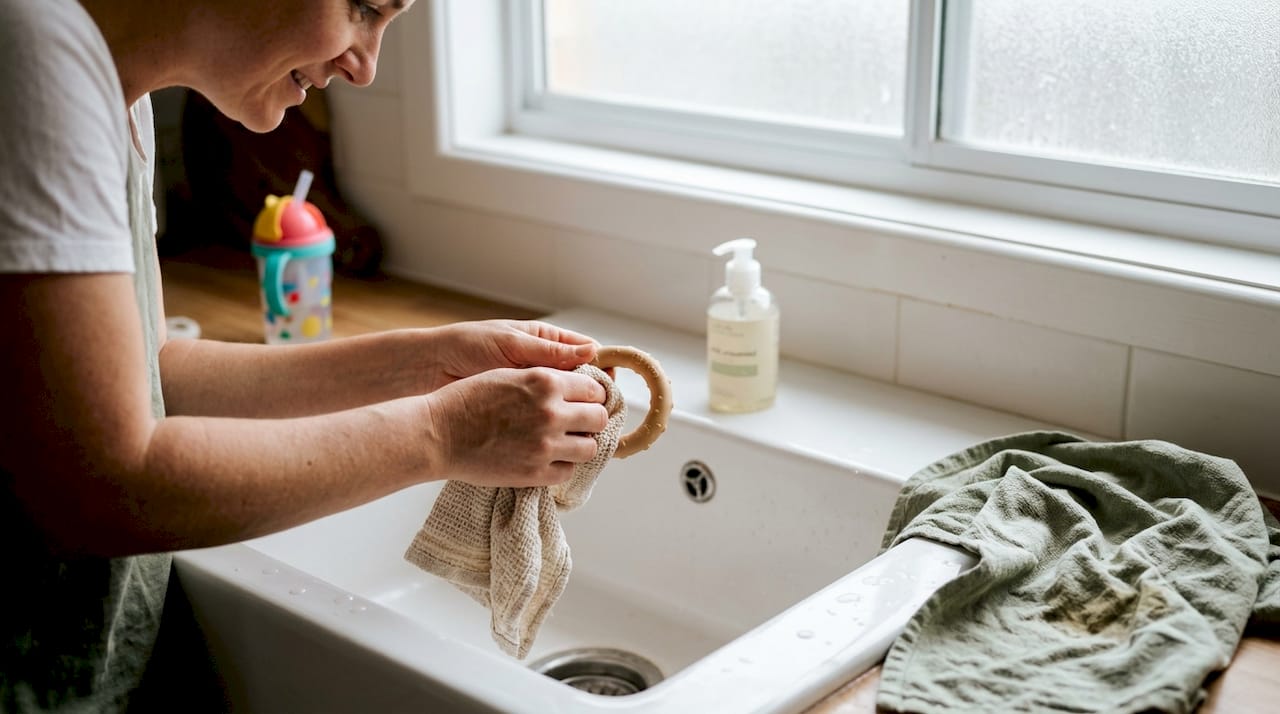
Wooden teethers offer a firmer texture that many babies prefer as their first teeth push through. The resistance of smooth hardwood against tender gums can be genuinely relieving. Always choose wood that is either untreated or finished with a food-safe, plant-based coating.
Organic cotton teethers and fabric rings are ideal for younger babies, from birth to around 4 months, before the stronger urge to chew sets in. They are soft, washable, and non-threatening for the youngest infants.
Here is a quick reference across material types:
| Material | Best age | Texture | Care |
|---|---|---|---|
| Natural rubber | 4 months+ | Soft, flexible | Wipe with damp cloth |
| Untreated wood | 4 months+ | Firm, smooth | Wipe dry; never soak |
| Organic cotton | Newborn+ | Soft, crinkly | Machine wash, air dry |
Key features to look for across all types:
You can browse a curated range of eco teething toy options to find what suits your baby’s age and stage. For a broader look at teething toy options in Australia, the teething toy buyer’s guide covers practical evaluation tips.
With an understanding of types and benefits, it is time to get specific about making the safest choice for your baby.
Here is a practical checklist to guide your decision:
Pro Tip: Babies typically move through three rough teething stages: early gumming (0 to 4 months), active chewing (4 to 12 months), and molar pressure (12 to 24 months). Choose a material and texture that matches where your baby is right now, and update your selection as they grow.
Spotting greenwashing is worth mentioning here. Phrases like “eco-inspired,” “nature-themed,” or “made with natural ingredients” can be misleading. These are not the same as certified natural materials. Trust certifications over marketing language every time.
For most of the 20th century, plastic was the default material for almost every baby product. It was cheap, easy to clean, and endlessly mouldable. The idea that it might also be leaching chemicals into babies’ bodies was not a mainstream conversation until relatively recently. Australian parenting culture is shifting now, and that shift is meaningful.
But here is something worth saying clearly: “natural” is not a synonym for “perfect.” We see parents in our community occasionally assume that because a toy is made from wood or rubber it needs no scrutiny at all. That is not the case. Poor-quality wooden toys can splinter. Rubber can harbour mould if not dried properly. Organic cotton toys with poorly stitched attachments can present choking risks.
The smartest approach is to combine genuine eco-consciousness with practical rigour. Read certifications. Inspect products. Replace worn toys promptly. The goal is not purity for its own sake but genuinely safer, more sustainable choices that hold up in real family life. For ongoing parenting resources on navigating these decisions, we are always adding new guides to help Australian families make informed choices without the overwhelm.
If you are ready to take the next step towards safer, more sustainable teething solutions, Hello Charlie makes it straightforward to find what you need.

At Hello Charlie, we stock a carefully selected range of natural teething toys from trusted eco brands, all vetted for safety and sustainability. Whether you are looking for a natural rubber teether for an active chewer, a wooden baby play gym to support early sensory development, or want to explore our full range of sustainable baby products, we deliver Australia-wide with transparent pricing and genuine product information. Your baby deserves the best start, and we are here to help you find it.
Natural teething toys, made from materials like rubber and untreated wood, usually contain fewer chemicals than plastic and are considered safer for babies to chew. Natural materials reduce exposure to harmful substances compared to conventional plastics.
Most natural teething toys can be wiped with a damp cloth and mild soap; avoid soaking wooden toys and always air-dry thoroughly. Proper maintenance by material helps toys last longer and stay hygienic.
Look for certifications like EN71, which covers toy safety standards, and make sure all paint and finishes are non-toxic and suitable for children. Safety certifications are vital for Australian parents choosing teething toys.
Yes, organic fabric toys can be a gentle choice for the youngest babies, but always check for securely attached parts and ease of cleaning. Organic textiles are popular for their softness and safety when well-made.