
What Are Superabsorbent Polymers? Uses, Safety and Environmental Trade-Offs
, by Hello Charlie Blogs, 5 min reading time
, by Hello Charlie Blogs, 5 min reading time
Superabsorbent polymers rarely appear on a shopping list, yet many of us use them every day. They sit inside disposable nappies, period products and continence pads, helping a thin product hold far more liquid than cellulose alone. They are also used in wound dressings, spill control and some agricultural applications.
That usefulness raises two sensible questions: how do superabsorbent polymers work, and what happens to them after use? The first answer is reassuring from a product-safety perspective. The second is more complicated environmentally.
Quick answer: the cross-linked sodium polyacrylate used in modern absorbent hygiene products is designed to stay inside the absorbent core and is not readily absorbed through skin. Available assessments support its intended use. The larger drawback is waste: conventional SAPs are synthetic, persistent materials that make disposable products harder to recycle or compost.
A superabsorbent polymer, usually shortened to SAP, is a cross-linked material that can take up and retain many times its own weight in liquid. Most SAP used in disposable hygiene products is based on partially neutralised acrylic acid and is commonly described as sodium polyacrylate.
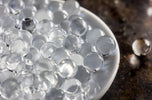
The polymer chains form a three-dimensional network. Water is attracted into that network, and the cross-links stop the material dissolving. Instead, the dry granules swell into a gel. Salts and other substances in real-world liquids reduce the spectacular absorption figures sometimes quoted for distilled water, so “absorbs 300 times its weight” should never be treated as a fixed result in every application.
“Safe” depends on the polymer, its purity, the way it is contained and the intended exposure. In a disposable nappy, SAP granules sit inside the absorbent core rather than being deliberately applied to skin. The cross-linked polymer has a very high molecular weight and is not readily bioavailable.
Published safety assessments of disposable nappies consider the identity of each material, possible impurities, how much might transfer through urine, which layer touches skin and how often the product is used. These assessments support the use of SAP-containing nappies under normal conditions. It is worth noting that several widely cited nappy-safety studies have authors affiliated with manufacturers, so transparency about funding matters even when the methods and findings are useful.
A very full or damaged nappy can occasionally release swollen gel beads. Remove the nappy, gently wipe or rinse the skin, and use a fresh product. The gel is not food, so keep loose granules away from children and pets and seek advice if a meaningful amount is swallowed or gets into the eyes.
The history of highly absorbent tampons is often used to imply that SAP in nappies causes toxic shock syndrome. That comparison is misleading. Toxic shock syndrome is associated with toxin-producing bacteria and particular conditions of tampon use; a nappy’s external absorbent core is a different product and exposure.
There is no good evidence that intact SAP in a properly made nappy is a routine cause of nappy rash. In fact, drawing moisture away from skin can help reduce overhydration, one contributor to irritant dermatitis. Nappy rash is more commonly linked to prolonged contact with urine and faeces, friction, diarrhoea, infrequent changes, fragrance or other irritants, and sometimes Candida infection.
Conventional SAPs solve a moisture problem but create a materials problem. They are generally derived from fossil feedstocks and are not readily biodegradable. Once mixed with plastics, cellulose and human waste inside a used nappy, the materials are difficult to separate.
Thinner SAP-based nappies can use less fluff pulp and may reduce shipping weight compared with older bulky designs. That does not make a disposable nappy biodegradable, and it does not remove the landfill impact. Environmental claims should consider the full product: raw materials, manufacturing, transport, how many nappies are used, disposal and whether local recycling infrastructure actually exists.
Researchers and manufacturers are developing absorbent materials based partly on starch, cellulose and other renewable feedstocks. “Bio-based”, “biodegradable” and “compostable” are not interchangeable:
A nappy with a plant-based component may still contain conventional SAP, plastic films and adhesives. Check the percentage claim and disposal instructions rather than assuming the entire product can go into home compost.
For a closer look at this material in baby nappies, read Are SAPs Safe in Disposable Nappies?. Hello Charlie also explains its broader approach in our product-selection policy.