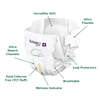
What to Look for in Disposable Nappies?

What to Look for in Disposable Nappies?

, by Hello Charlie Blogs, 8 min reading time

What to Look for in Disposable Nappies in 2026

A Practical Guide for Eco-Conscious Australian Parents

Choosing disposable nappies today isn’t just about leak protection anymore. More Australian parents are now asking deeper questions:

  • What materials are touching my baby’s skin?

  • Are there harsh chemicals or fragrances?

  • How sustainable is this brand really?

  • Can disposable nappies ever be “eco-friendly”?

  • Which nappies actually balance performance, safety, and environmental impact?

The truth is — not all nappies are created equal.

Some brands focus heavily on marketing buzzwords like “natural” or “plant-based”, while still using unnecessary additives or mixed materials that are difficult to recycle or break down.

At Hello Charlie, we’ve spent years researching eco nappies, ingredient transparency, certifications, and what genuinely matters for families looking for safer everyday essentials.

Here’s our updated 2026 guide to what to look for when choosing disposable nappies.


1. Fragrance-Free Is Still One of the Biggest Green Flags

One of the simplest but most important things to check is whether a nappy is completely fragrance-free.

Added perfumes in nappies serve no real purpose other than masking odours. For sensitive babies, fragrances can increase the risk of irritation or discomfort — especially during long wear periods.

Many mainstream nappies still contain:

  • Synthetic fragrances

  • Lotions

  • Dyes or inks

  • Unnecessary additives

For babies with eczema-prone or sensitive skin, simpler is usually better.

What we recommend looking for:

✅ Fragrance-free
✅ Lotion-free
✅ Chlorine-free or FSC-certified pulp
✅ Dermatologically tested

Brands like Bambo Nature and Muumi Baby continue to be popular among eco-conscious families because they focus on minimal unnecessary additives while maintaining strong performance.


2. “Eco” Doesn’t Always Mean Compostable

One of the biggest misconceptions in 2026 is that all eco nappies are compostable or biodegradable.

Most disposable nappies — including many marketed as “green” — still contain:

  • SAP (super absorbent polymers)

  • Plastic barriers

  • Elastic materials

  • Adhesives

Even compostable nappies often require commercial composting systems that are not widely available in Australia.

So what actually matters?

A more realistic approach is looking at:

  • Responsibly sourced materials

  • Reduced plastic usage

  • Lower chemical exposure

  • Renewable packaging

  • Ethical manufacturing

  • Carbon reduction initiatives

Some newer brands are introducing partially plant-based materials, but parents should remain cautious of vague sustainability claims without certifications or transparency.


3. Look for Trusted Certifications

Certifications can help separate genuine eco efforts from greenwashing.

Some of the most recognised certifications in the nappy industry include:

Nordic Swan Ecolabel

A highly respected environmental certification that assesses:

  • Chemical restrictions

  • Sustainability

  • Emissions

  • Material sourcing

  • Product safety

FSC® Certified Pulp

Ensures wood pulp comes from responsibly managed forests.

OEKO-TEX® Standard 100

Tests for harmful substances in textiles and materials.

Dermatologically Tested

Important for products that stay in constant contact with delicate skin.

Brands like Bambo Nature are well known for holding multiple environmental and safety certifications, which is one reason they remain a long-term favourite for many Australian families.


4. Absorbency Still Matters (A Lot)

A sustainable nappy that leaks constantly usually creates:

  • More laundry

  • More wasted nappies

  • More frustration

  • More product usage overall

Performance is still one of the most important sustainability factors.

Things to look for:

  • Good overnight absorbency

  • Flexible fit

  • Breathability

  • Wetness control

  • Soft elastic barriers that don’t leave deep marks

Interestingly, many parents switching from mainstream nappies are often surprised that premium eco nappies now perform just as well — or sometimes better.

Modern eco nappies have improved dramatically over the past few years.


5. Be Careful of “Natural” Marketing Claims

Words like:

  • Natural

  • Pure

  • Green

  • Plant-based

  • Chemical-free

…are not regulated terms in Australia for nappies.

Even “natural” nappies can still contain:

  • Plastics

  • SAP gels

  • Adhesives

  • Synthetic materials

Instead of focusing only on front-label marketing, look deeper into:

  • Full ingredient transparency

  • Material breakdowns

  • Brand philosophy

  • Certifications

  • Manufacturing standards

Brands willing to openly explain what their nappies are made from are usually more trustworthy than brands relying heavily on vague eco language.


6. Consider the Full Environmental Footprint

Sustainability isn’t just about the nappy itself.

It’s also worth considering:

  • Packaging waste

  • Shipping methods

  • Bulk buying options

  • Warehouse practices

  • Supply chain transparency

For example, buying nappies in bulk can reduce:

  • Packaging waste

  • Delivery emissions

  • Overall cost per nappy

You can explore bulk eco nappy options here:


7. The Best Disposable Nappy Is the One That Works for Your Family

Every baby is different.

Some babies need:

  • Extra overnight absorbency

  • Sensitive-skin friendly materials

  • Wider fits

  • Better newborn sizing

  • Stronger leak protection for active toddlers

There’s no single “perfect” nappy for everyone.

The goal is usually finding the best balance between:

  • Performance

  • Skin safety

  • Sustainability

  • Affordability

  • Availability

Frequently Asked Questions

Are eco nappies really better for sensitive skin?

Many eco nappies avoid fragrances, lotions, and unnecessary additives, which may reduce irritation risks for sensitive babies.

Are biodegradable nappies fully compostable?

Not always. Many biodegradable nappies still contain mixed materials that require industrial composting systems.

What certifications should I trust?

Look for recognised certifications like Nordic Swan Ecolabel, FSC®, OEKO-TEX®, and dermatological testing.

Are eco nappies more expensive?

Sometimes initially, but buying in bulk can significantly reduce the cost per nappy.

Do eco nappies perform as well as mainstream brands?

Modern eco nappies have improved significantly and many now offer excellent absorbency and leak protection.


Final Thoughts

Disposable nappies are something most families use every single day — often for several years.

While no disposable nappy is completely impact-free, choosing nappies with:

  • fewer unnecessary chemicals,

  • better transparency,

  • responsible sourcing,

  • and strong environmental standards

…can still make a meaningful difference.

At Hello Charlie, we continue to carefully curate eco nappies and baby essentials that align with the values many modern Australian families are looking for: safer materials, thoughtful design, and less greenwashing.

If you’re exploring eco nappies, you can browse:

Tags


© 2026 Hello Charlie , Powered by Shopify

    • American Express
    • Apple Pay
    • Google Pay
    • Mastercard
    • PayPal
    • Shop Pay
    • Union Pay
    • Visa

    Login

    Forgot your password?

    Don't have an account yet?
    Create account